Subscription retention research
16 Subscription Retention, Cancellation, and Win-Back Examples
Subscription retention is the result of recurring product value, predictable billing, recoverable problems, and a cancellation path that does not punish the customer.
Teams often look for one cancellation offer that will save a subscription. The larger opportunity exists before that moment. A subscriber needs to understand what renews, use the paid product repeatedly, recover from billing or product problems, change a plan when needs change, and trust that cancellation will work. Interface design supports retention by making those jobs clear. It cannot compensate for weak recurring value or a poor offer.
This review uses sixteen recorded screens from Ascend, SunSafe, Voice Recorder, SubPilot, Bible Chat, Eppika, and Precious. The set covers trial timelines, active subscription management, plan changes, cancellation entry points, restore purchases, support, a product-value survey, renewal copy, and time-limited offers. The screens are evidence of interface choices only. They do not prove that any pattern reduced churn, increased trial conversion, prevented refunds, or won customers back.
For the acquisition side of the decision, read the mobile app paywall examples. For the setup that should deliver first value before renewal, use the app onboarding screens guide.
01. Before churn
Design the first renewal before designing the cancellation modal.
Trial and billing clarity create the expectations retention must later satisfy.
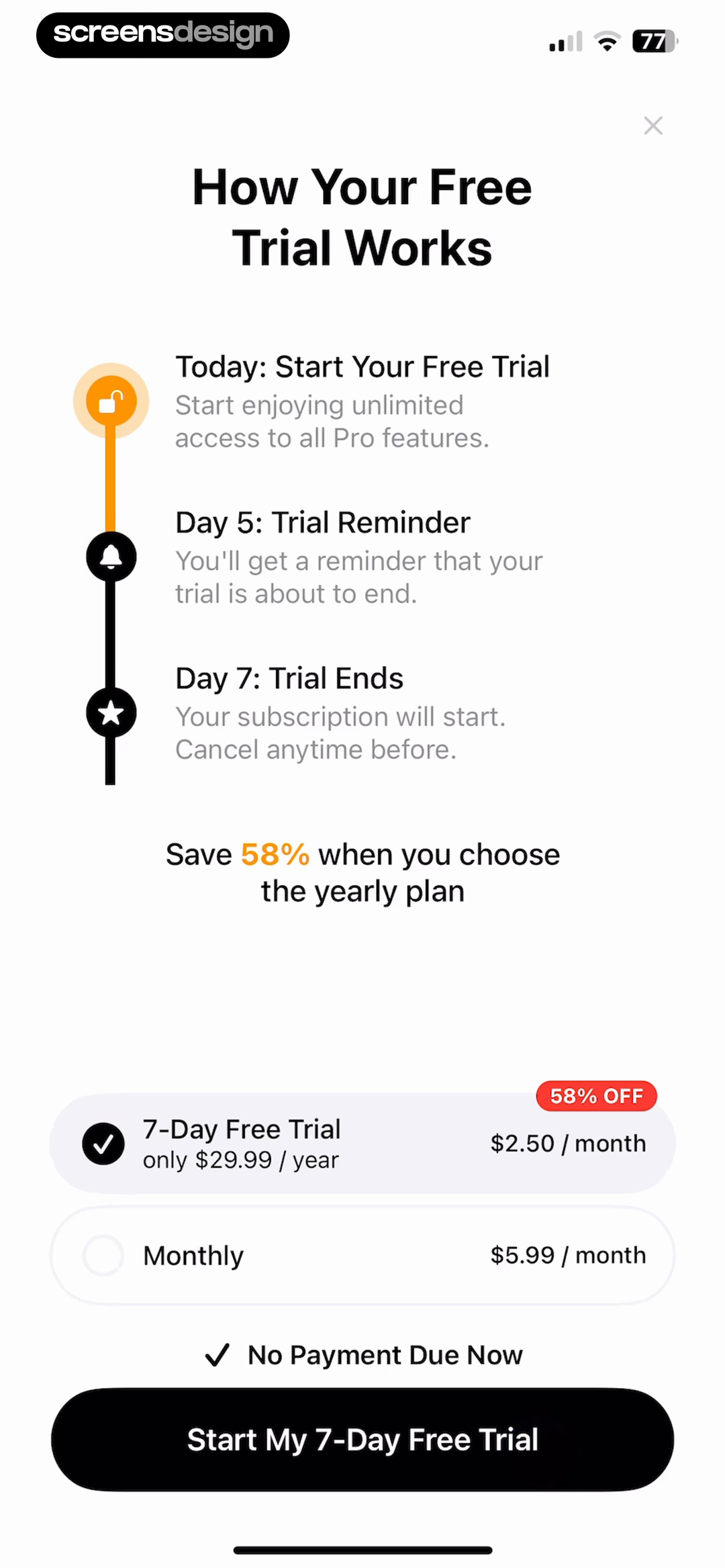
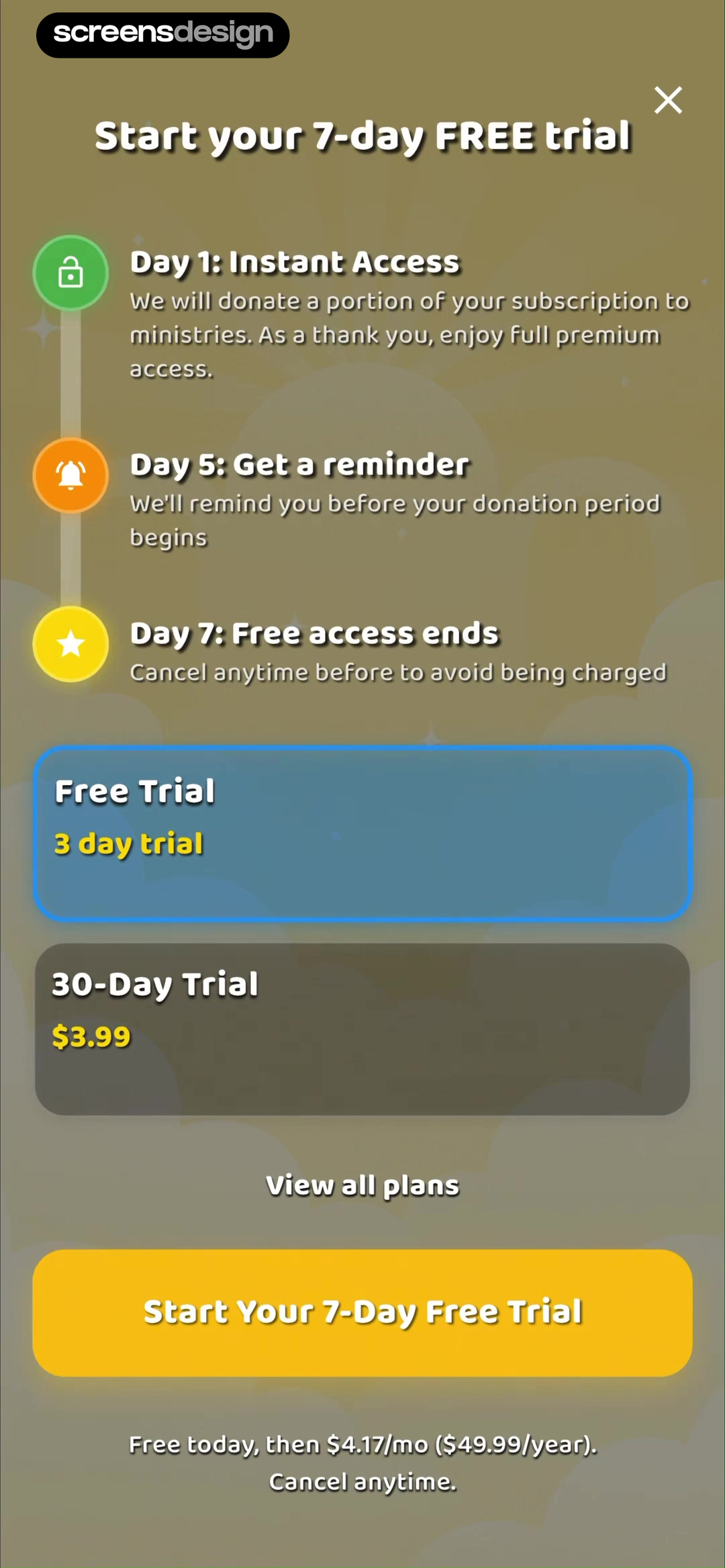
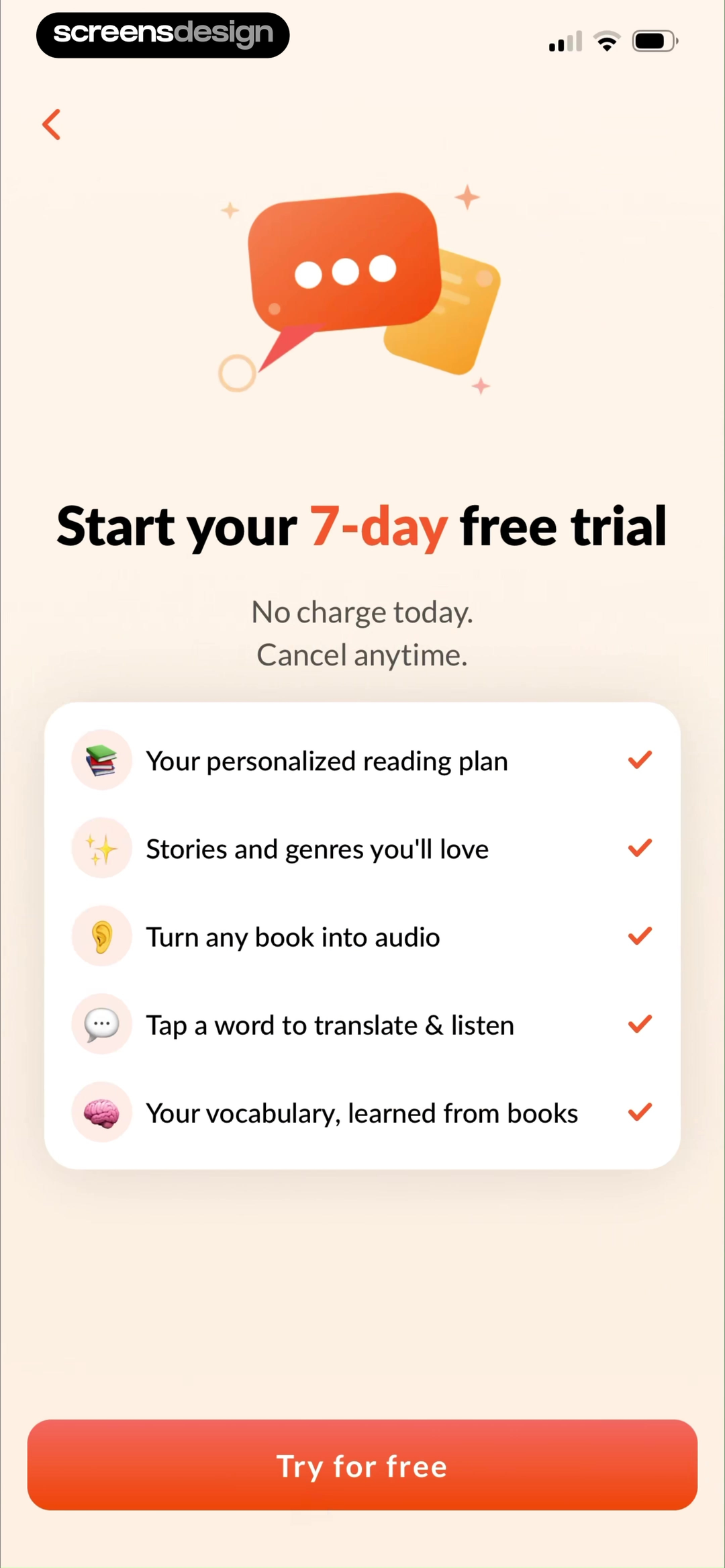
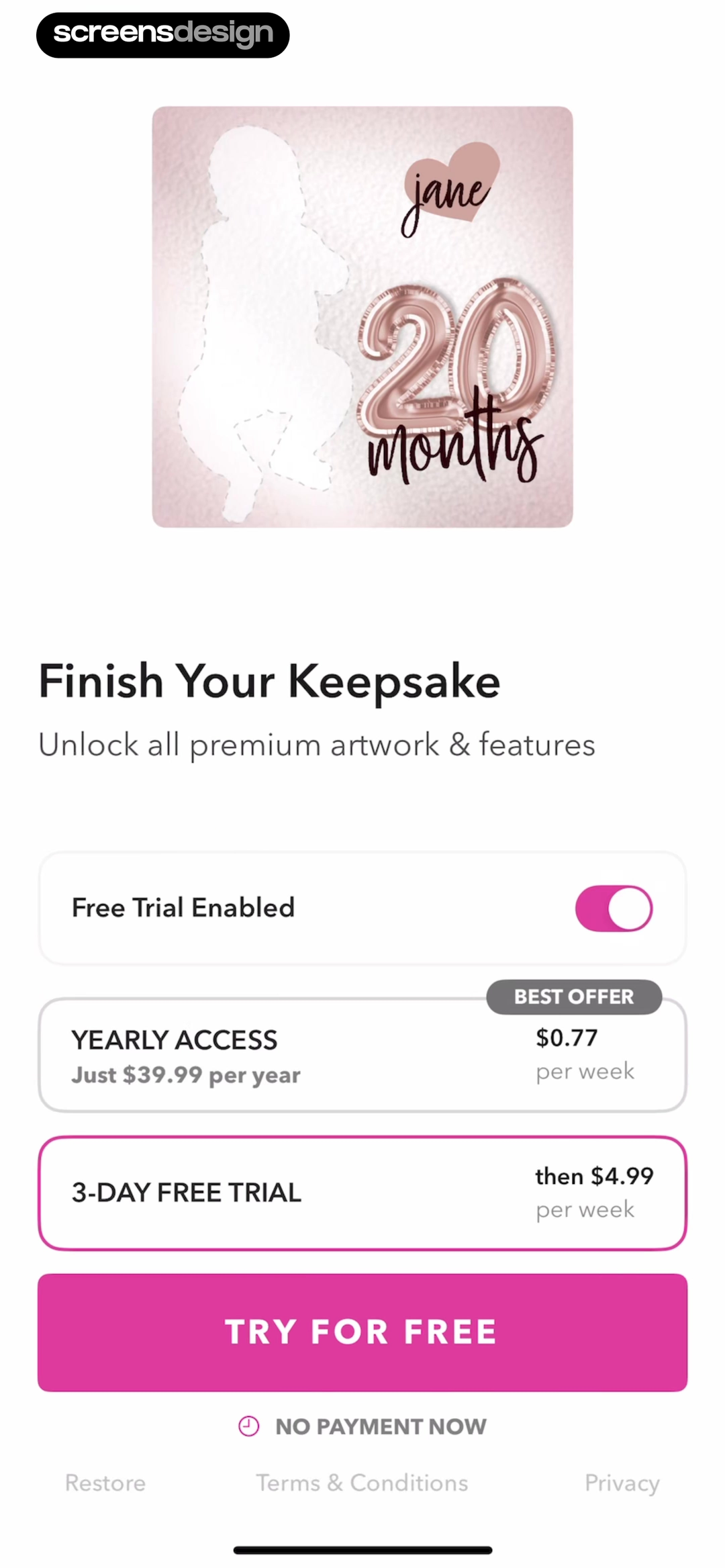
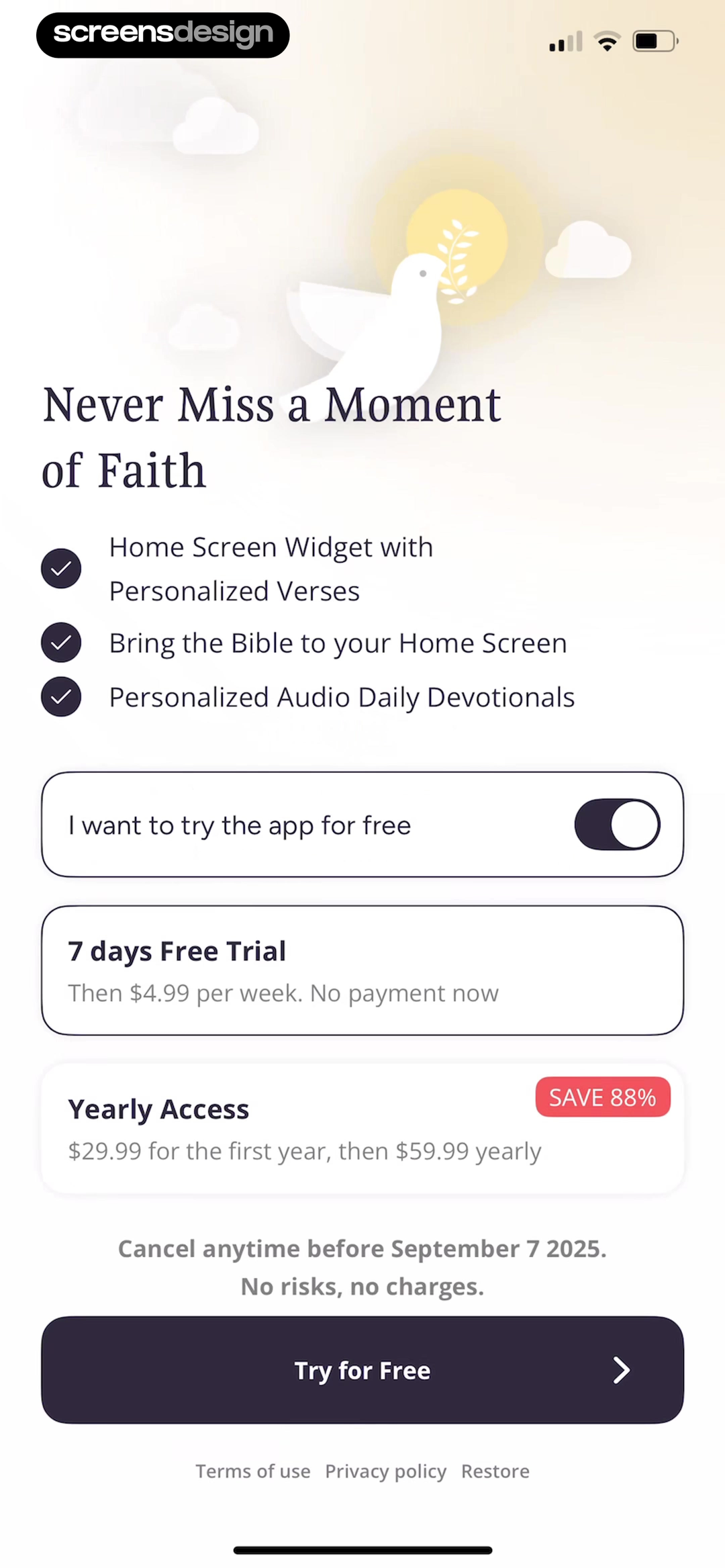
SunSafe shows a trial timeline with access today, a reminder on day five, and billing on day seven. Ascend uses a similar sequence and explicitly states when free access ends. Eppika says no charge today and cancel anytime before connecting the trial to a personalized reading plan. These screens make the commercial timeline visible while the value is being introduced.
Trial-to-paid conversion should not depend on hiding the renewal. State the price, billing period, trial length, start date, renewal behavior, and cancellation route near the primary action. If a reminder is promised, explain the channel and let the user control notification access. Keep restore purchases and terms reachable without reducing them to low-contrast decoration.
After purchase, move retention work into the product. Show the next useful paid task, help the subscriber complete it, preserve progress, and explain limits before they interrupt. A renewal reminder should connect the upcoming charge to current plan and access, not arrive as a generic marketing notification.
02. Subscription management
Put plan, price, renewal, and control in one place.
A subscriber should not need to start cancellation to learn what they are paying for.
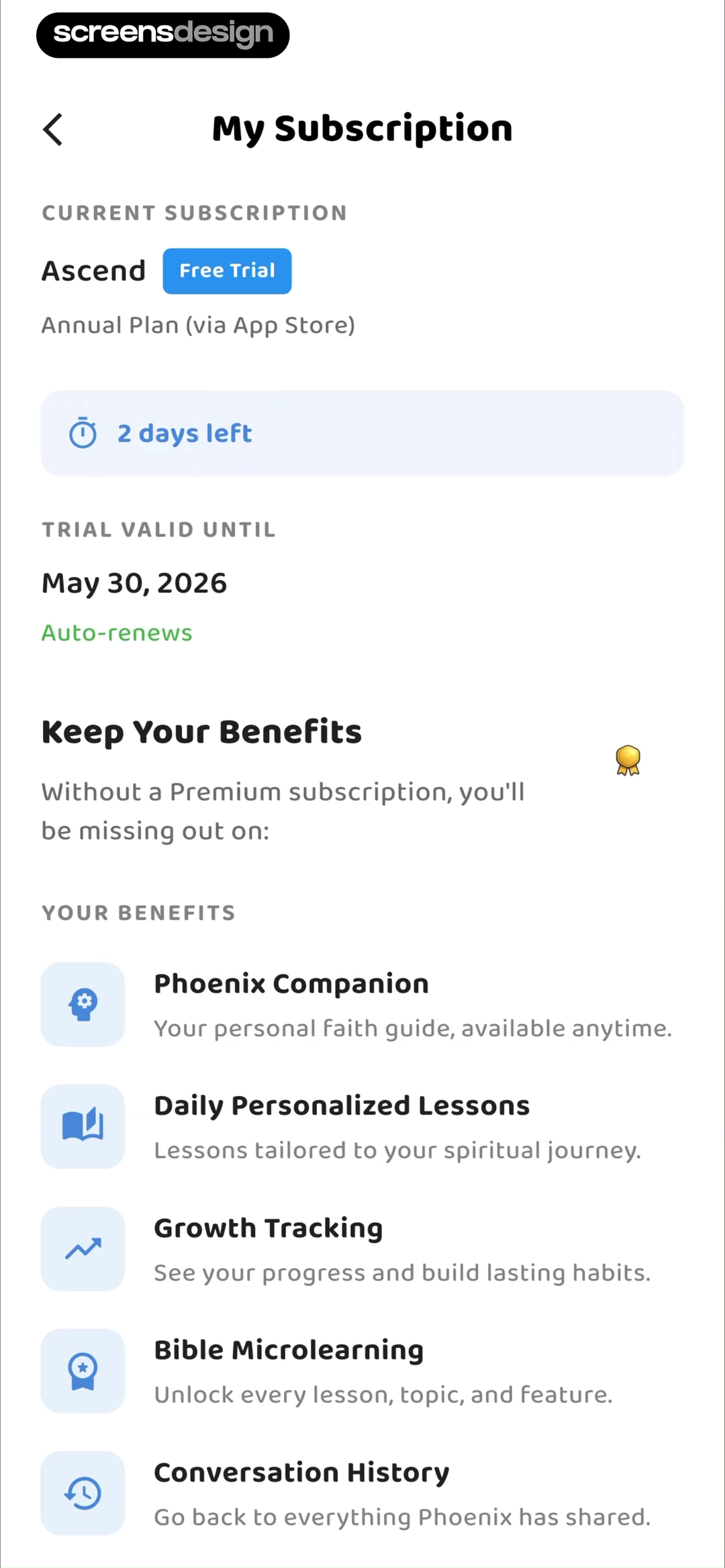
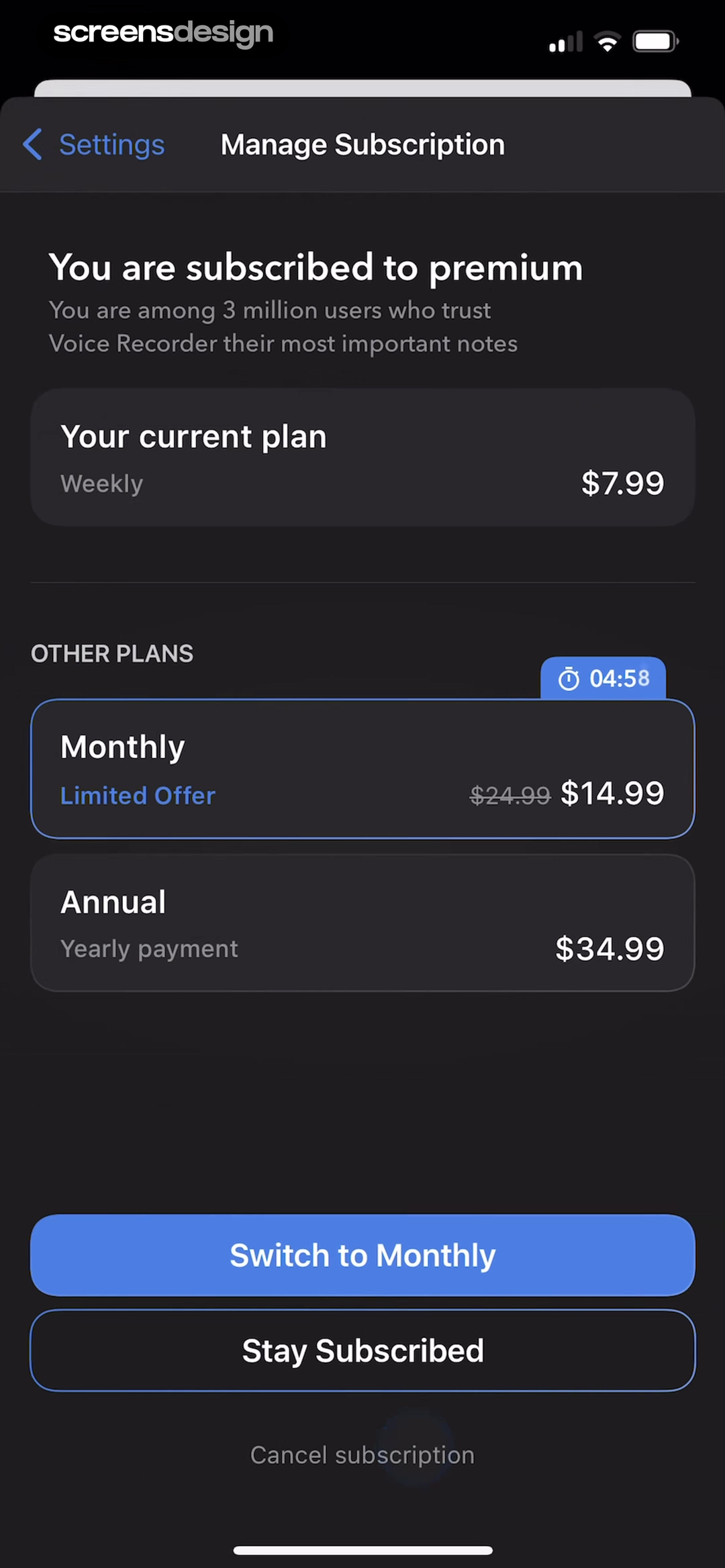
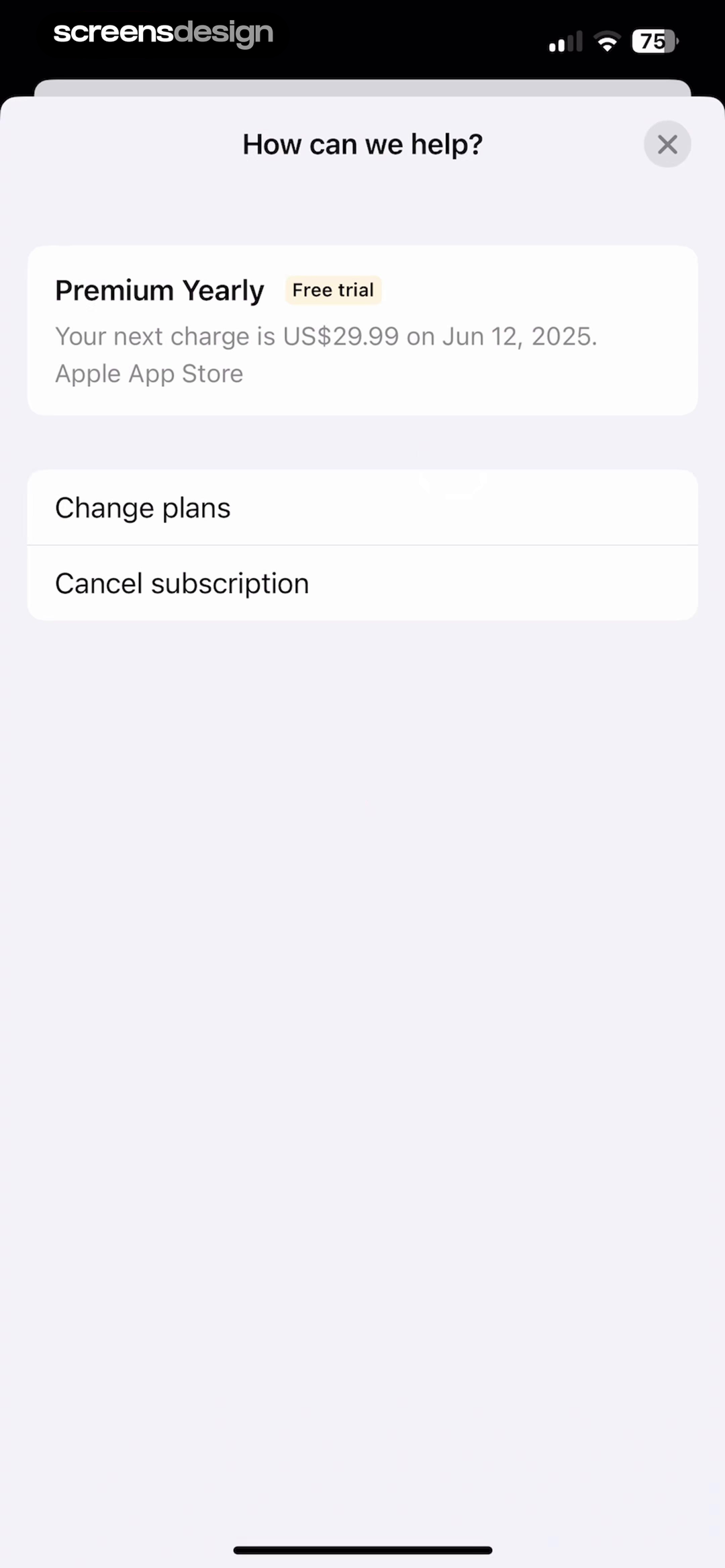
Ascend's subscription screen shows the current product, free-trial state, annual plan, time remaining, trial-valid date, and auto-renewal. Voice Recorder names the current weekly plan and price before showing other plans. SunSafe shows the current yearly trial, next charge, platform, change plans, and cancel subscription. These are useful foundations for a subscription home.
The management surface should include plan name, entitlement, price and currency, billing period, next billing date, trial or grace status, purchase platform, payment method where available, invoices or receipts, change plan, restore, support, and cancel. Use the same terminology as the purchase screen. If the store controls billing, explain the handoff before opening it.
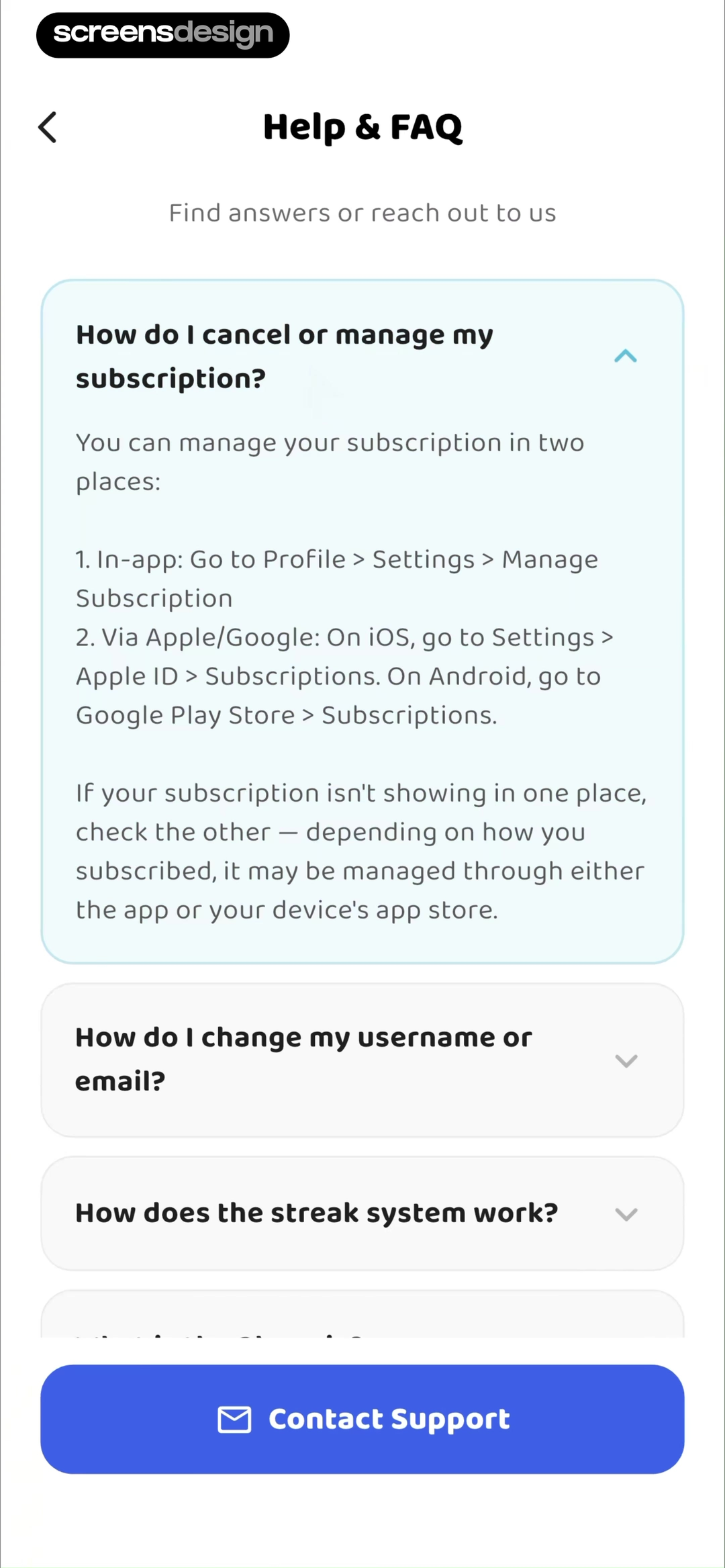
Do not hide management under delete account, help, or a generic legal menu. A persistent route reduces support demand and gives customers a chance to solve plan mismatch before canceling. Account deletion and subscription cancellation are separate actions and must explain their independent consequences.
03. Cancellation path
Keep cancellation short, explicit, and reversible until confirmation.
A cancellation flow can offer help without making the customer fight the interface.
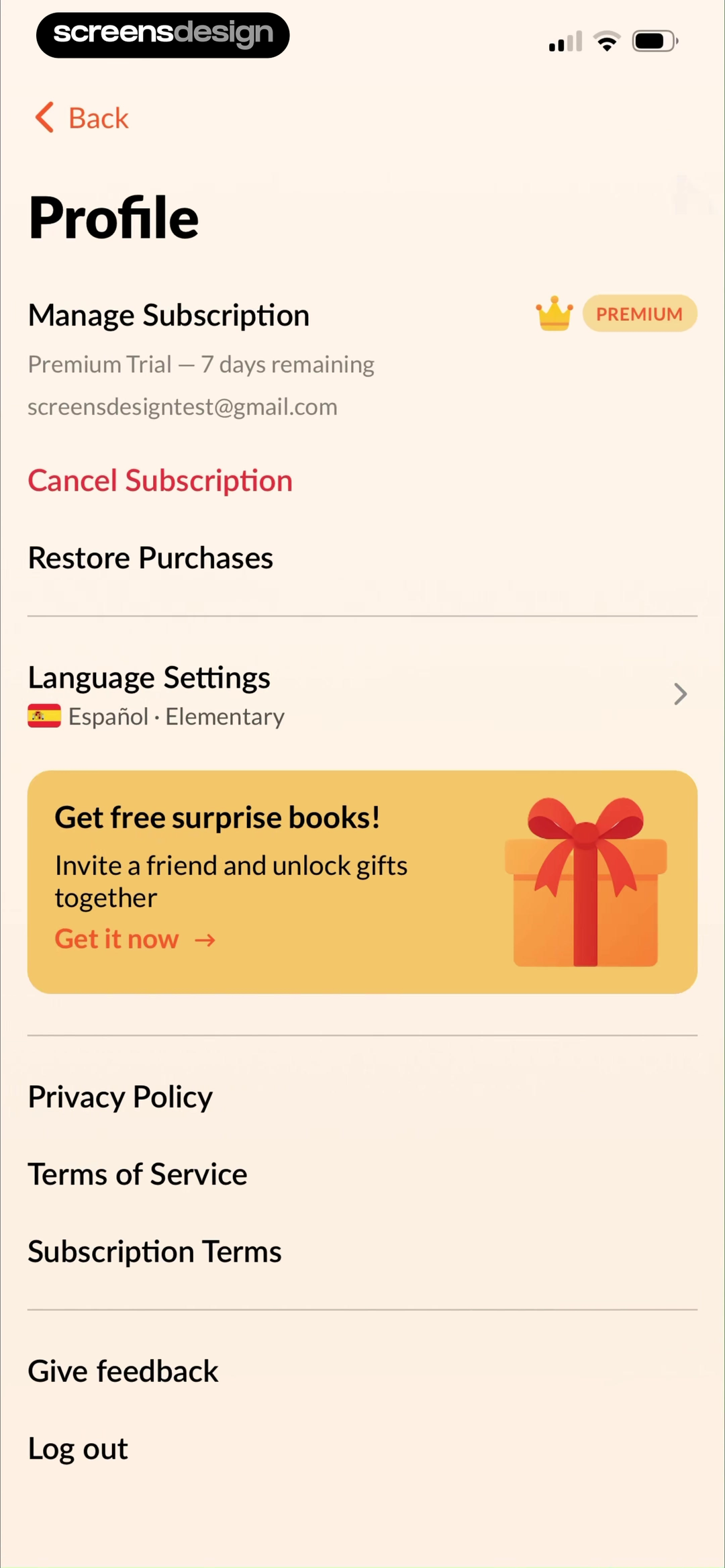
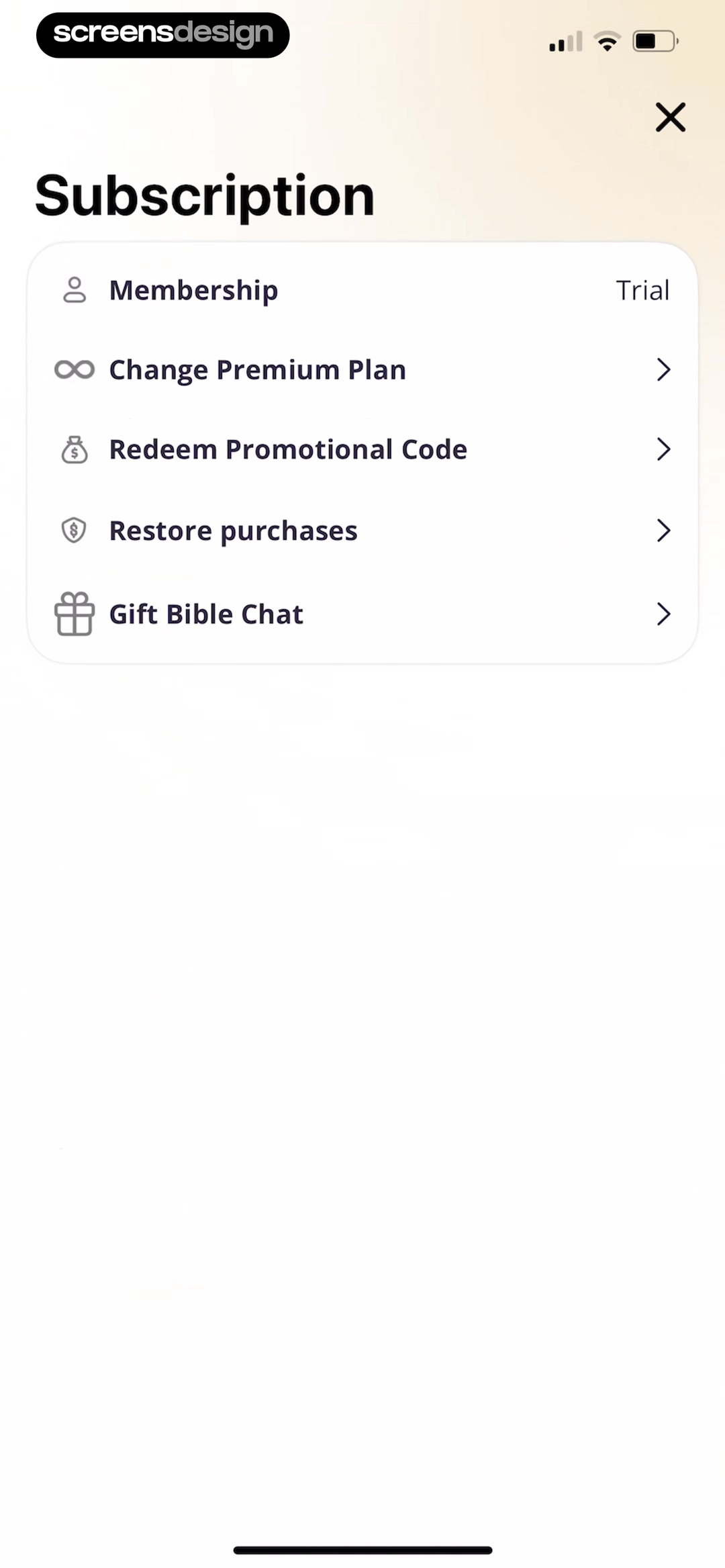
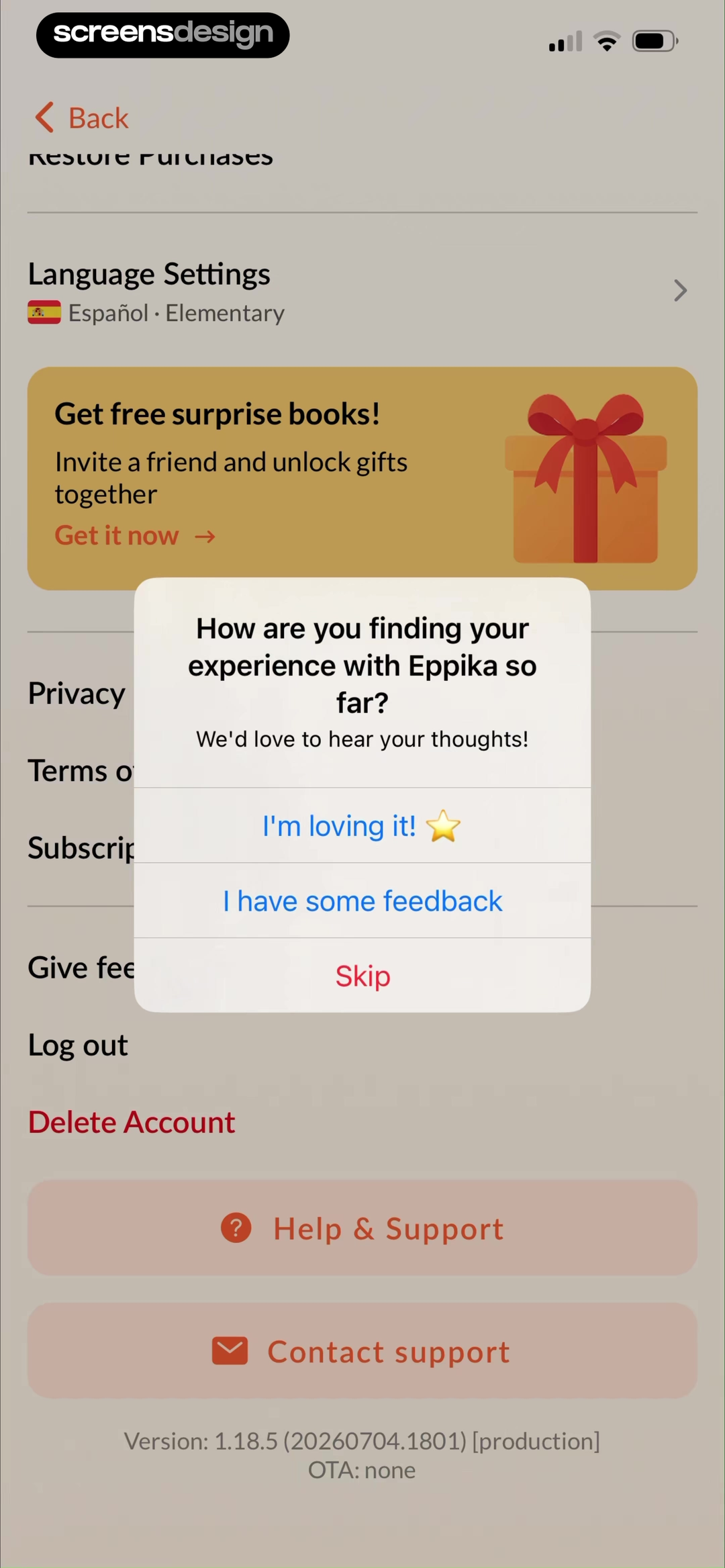
Eppika places Cancel Subscription and Restore Purchases inside the profile's subscription area. Bible Chat's subscription settings expose change plan, promotional code, restore purchases, and gifting. Ascend's help content explains both in-app and store-managed cancellation routes. These screens show different parts of a complete path, but none should be used to justify adding unnecessary steps.
A good flow starts with current plan, next charge, and access end date. It can ask one optional reason, then offer an alternative only when it directly addresses that reason. The final screen should state canceled or scheduled to cancel, final access date, refund status, data or entitlement behavior, and how to reactivate. Send the same confirmation by email or the user's chosen channel.
Avoid hidden cancel links, disabled back navigation, repeated emotional copy, false countdowns, or an offer that must be declined several times. Never rename continuation so it appears to confirm cancellation. Cancellation should not require contacting support when purchase occurred self-serve, unless the platform genuinely requires that route.
04. Relevant alternatives
Offer pause, downgrade, or support only when it solves the stated problem.
A save offer is useful when it changes the reason the subscriber is leaving.
A subscriber leaving because the app is too expensive may benefit from a lower tier, monthly plan, temporary pause, or clearly bounded discount. Someone leaving because the product does not work needs support or an honest cancellation, not the same discount. Someone who finished a temporary project may want expiry without reminders. The reason should determine whether an alternative appears.
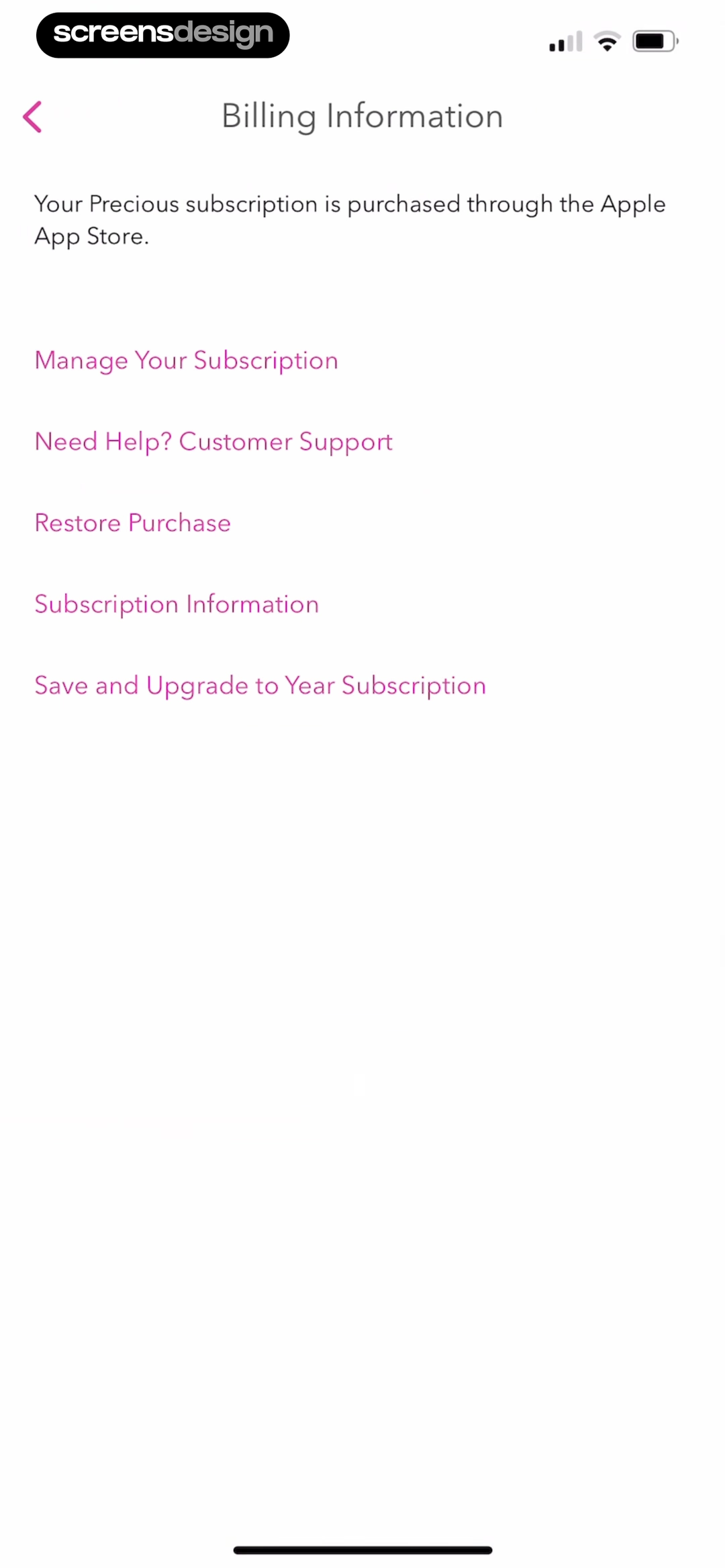
Precious shows billing information, store-managed subscription, support, restore, and a yearly-upgrade option. Voice Recorder shows other plans after the current weekly plan. These are management alternatives that can reduce plan mismatch when the difference in price and entitlement is explicit. They should not replace a visible cancel action.
For pause, state duration, access during pause, restart date, billing, data retention, and early resume. For downgrade, state when it takes effect and what happens to content above the new limit. For support, keep the cancellation state saved so asking for help does not force the customer to restart.
05. Learn from churn
Ask one question the product team can act on.
A cancellation reason is product research, not a gate the customer must pass.
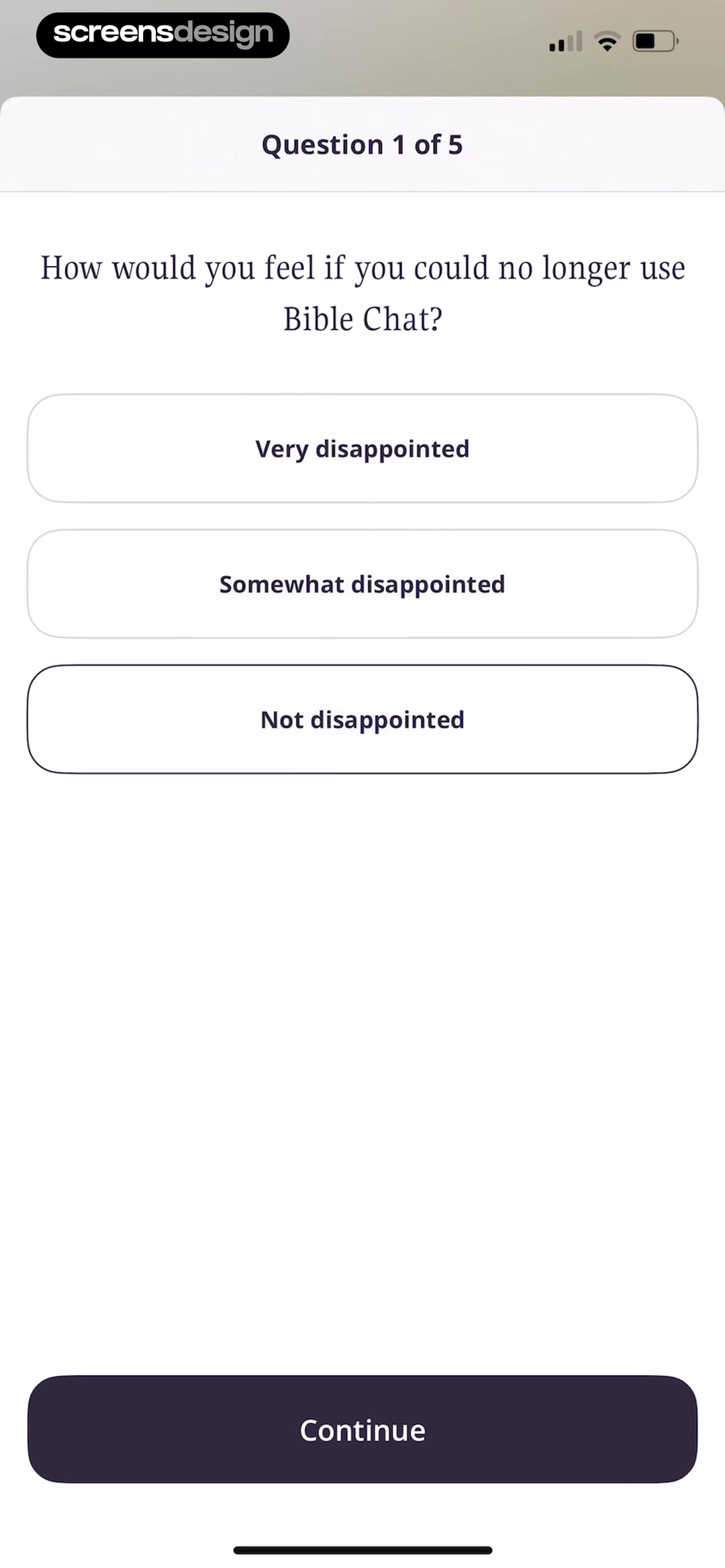
Bible Chat asks how disappointed the user would be if the product were no longer available. That product-value question is not itself a cancellation reason, but it shows a concise single-question pattern. A cancellation survey can similarly offer a short list such as too expensive, temporary need ended, technical problem, missing feature, privacy concern, or not using it enough, plus optional detail.
Make the survey optional and keep the cancel action visible. Do not force a text explanation or use the answer to create repeated detours. Send technical and billing issues to an immediate recovery path while still honoring cancellation. Aggregate answers with product usage and support context carefully, respecting privacy and avoiding claims that the survey alone explains churn.
Measure whether subscribers reached recurring value before they left. Useful segments can include trial canceled before first value, active subscriber no longer using the product, failed payment, plan mismatch, completed temporary job, and product issue. The interface should support these states, but retention decisions require product analytics and qualitative research beyond screenshots.
06. Win-back and return
Invite a return with context, not generic urgency.
A win-back offer should reflect why the customer left and what has changed.
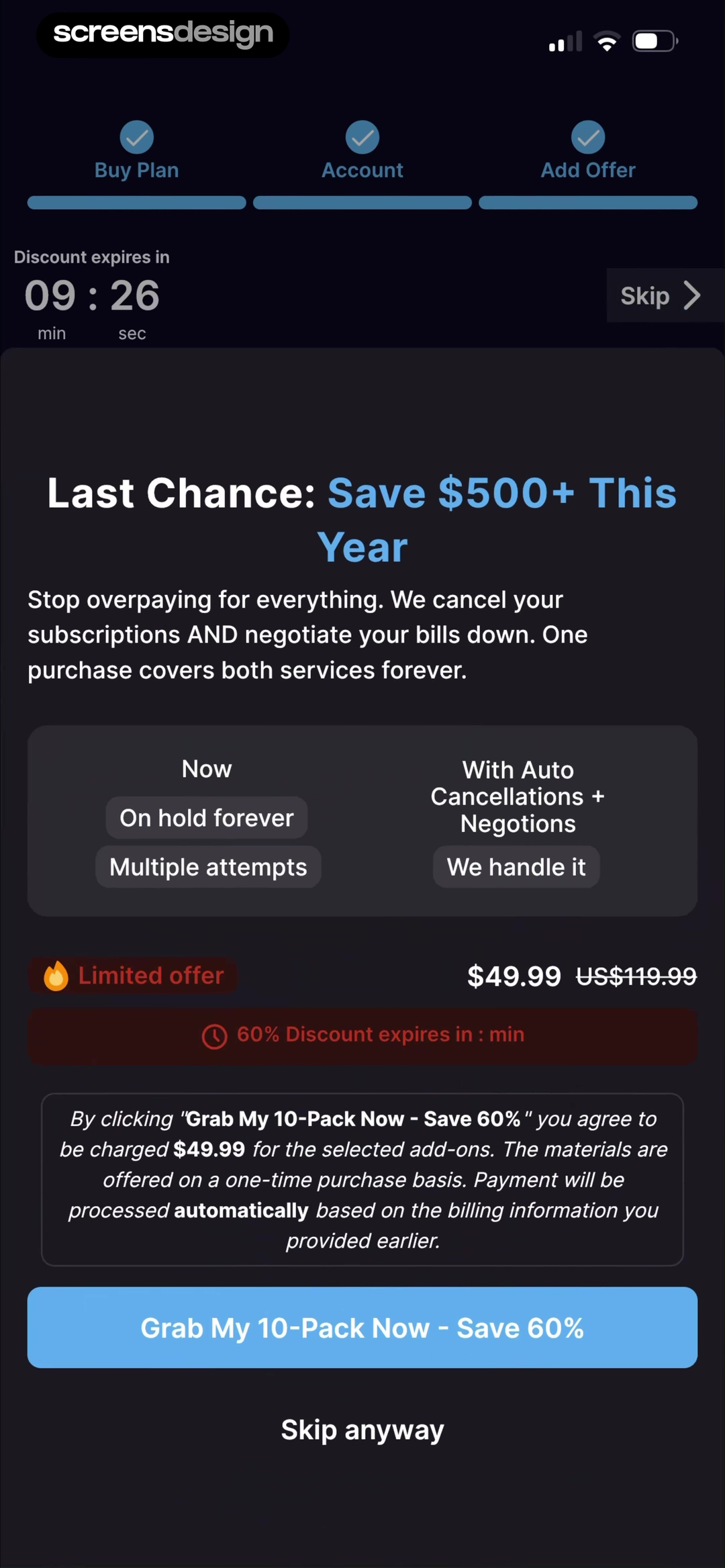
SubPilot presents a time-limited last-chance offer with savings claims and a skip action. The interface demonstrates the mechanics of a promotional offer, but a countdown and broad savings promise do not prove relevance or effectiveness. A responsible win-back should state eligibility, discounted price, duration, renewal price and date, included entitlement, and an easy dismissal.
Use win-back after cancellation or expiry when the customer can make a new decision. Segment by reason and product state. A lower price may fit price sensitivity, a new feature may fit missing capability, and a resume shortcut may fit a temporary lapse. Do not continue sending the same offer after a clear decline, and respect communication preferences.
Preserve useful account state so return is easy, while explaining data-retention limits. A reactivated subscriber should land on the saved project, plan, or next action that makes the paid product valuable. ScreensDesign Pro can help teams inspect how offers connect to management, cancellation, expiry, and return across complete recorded flows rather than judging one promotional card in isolation.
07. Billing recovery
Treat failed payment as a recoverable account state.
Involuntary churn needs a different flow from a subscriber who chose to leave.
A billing-recovery screen should state that payment failed, which plan is affected, whether access continues during a grace period, the next retry date, and how to update the payment method through the correct platform. Confirmation should restore a clear active state. Do not use cancellation language for a technical billing problem.
Send reminders in proportion to the consequence and user preference. Keep links secure and direct. If the store owns billing, explain how to update payment there and refresh entitlement in the app. Restore Purchases is not a substitute for resolving a failed renewal, so label each action by its actual purpose.
The selected corpus contains management and restore states but no complete recorded failed-payment flow suitable for a visual claim. That absence is important: teams should research their own billing provider, App Store or Play Store behavior, grace periods, and customer-support cases before designing this path.
Review checklist
Audit subscription state from first trial day through return.
Test trial start, reminder, conversion, renewal, plan change, pause, downgrade, support, cancellation, store handoff, confirmation, access end, restore, failed payment, grace period, reactivation, win-back decline, and account deletion. Confirm that plan, price, dates, entitlement, platform, and next action remain consistent.
Review claims, savings, countdowns, eligibility, renewal, refund, and cancellation language with legal and billing experts. Test every path at real device width, with unavailable network, stale entitlement, multiple platforms, shared plans, localization, and assistive technology.
- Trial screens state price, billing period, start date, renewal, reminder, and cancellation route.
- The management page exposes current plan, entitlement, next charge, platform, support, restore, and cancel.
- Cancellation remains visible and does not require repeated offer declines.
- Reason surveys are optional and route relevant issues without blocking cancellation.
- Pause and downgrade explain timing, access, billing, content limits, and resumption.
- Confirmation names final access date, refund status, data behavior, and reactivation.
- Billing failure preserves account context and provides a secure, platform-correct recovery.
- Win-back offers state eligibility, discount term, renewal price and date, value, and dismissal.
Questions and answers
App subscription retention questions
How do you retain app subscribers after the first month?
Help subscribers reach a recurring job, preserve progress, explain paid limits, surface the next useful action, and make plan and billing information easy to manage. Test product value and customer problems, not only cancellation offers.
How can an app reduce voluntary subscription churn?
Improve recurring value, identify plan mismatch, offer relevant support, pause, or downgrade, and keep cancellation clear. Use an optional reason to learn, then honor the decision.
How can an app improve free-trial-to-paid conversion?
Set clear billing expectations, guide the subscriber to first and repeated value during the trial, remind only as promised, and connect the paid plan to specific capabilities. Do not hide renewal terms.
What should a subscription cancellation flow include?
Include current plan and next charge, an optional reason, at most one relevant alternative, clear confirmation, final access date, refund status, data behavior, and a reactivation path.
Should an app offer pause or downgrade before cancellation?
Offer it only when it addresses the stated reason. Explain price, timing, access, limits, resumption, and the effect on saved content while keeping cancellation visible.
What makes an effective app win-back offer?
A relevant reason to return, a substantiated value claim, clear discounted price and duration, renewal price and date, eligibility, preserved account context, and an easy decline.
How do apps recover failed subscription payments?
State the failure, affected plan, grace period, retry date, access state, and secure payment-update route. Confirm recovery and distinguish it from restore purchases or voluntary cancellation.
How can clearer paywalls reduce refund requests?
Show price, billing period, trial dates, renewal, reminders, entitlement, restore, terms, and cancellation route before purchase. Clear expectations can reduce confusion, but actual refund outcomes must be measured.
Should onboarding answers personalize a paywall?
They can personalize the value explanation when the answers genuinely change the plan or paid capability. Do not manipulate urgency, invent savings, or hide the full price and renewal.
How do you improve subscription retention without dark patterns?
Build recurring product value, transparent billing, reliable support, relevant plan flexibility, respectful reminders, recoverable billing, easy cancellation, and reason-aware win-back. Measure cohorts and customer feedback rather than relying on obstructive UI.
Apps referenced in this page
Open the products behind the examples.






2,715 apps in the top charts.Ask them anything.
Search recorded paywall, trial, subscription-management, cancellation, restore, and offer screens, then ask ScreensDesign Pro how leading apps handle the exact retention or monetization moment you are improving.