Subscription retention design
How to Reduce App Subscription Churn: 10 Interface Examples
Subscription retention is shaped by whether people can see value, understand billing, change plans, and recover from a mismatch without losing trust.
App subscription churn is not one interface problem. A subscriber may leave because the product never reached first value, the plan no longer fits, a renewal feels surprising, a paid limit is unclear, or cancellation is the only visible control. Product design cannot remove every reason to leave, but it can prevent confusion from becoming one.
This review studies ten recorded subscription-management screens from ten apps. It focuses on visible lifecycle decisions: benefit recall, usage context, annual and monthly choices, renewal dates, trial reminders, downgrade consequences, and cancellation access. No screen is treated as evidence that a pattern caused retention.
For cancellation surveys and save offers, compare the subscription cancellation and win-back examples.
01. Value evidence
Put current value beside the subscription status.
A plan name alone cannot remind someone why they pay.
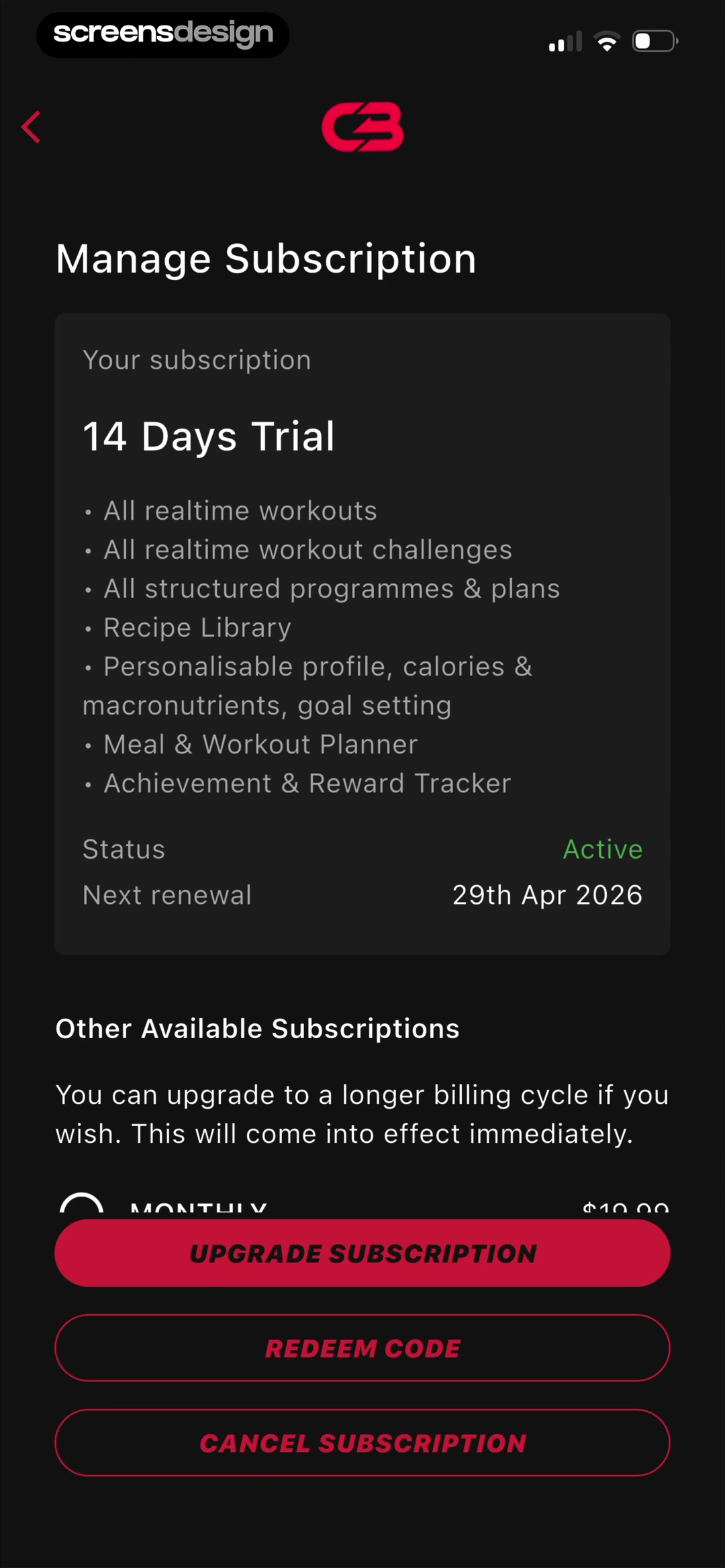
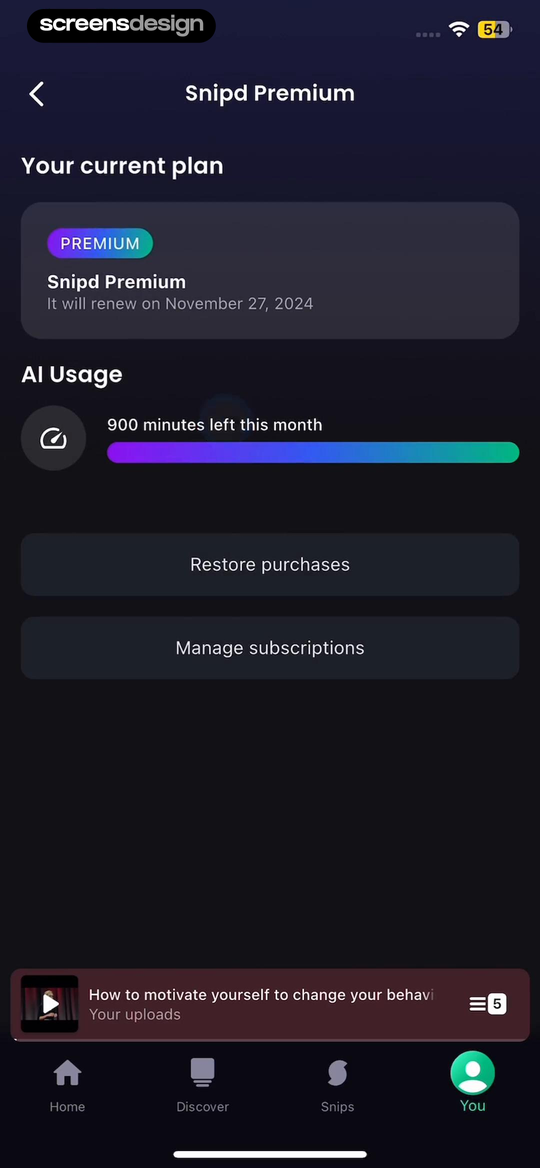
Courtney Black Fitness lists the workouts, challenges, recipes, planning, and tracking included in its trial. Snipd pairs Premium status with the renewal date and the exact AI minutes remaining for the month. Both make the subscription concrete through current access or usage.
Use evidence the subscriber can verify: sessions completed, exports created, content saved, minutes remaining, goals advanced, or benefits used. Do not substitute a generic premium badge for product-specific value. If an allowance resets, show the period and what happens to unused capacity.
Avoid turning low usage into blame. A quiet month may be intentional or caused by seasonal need. Offer a useful next action such as resume, discover a relevant feature, or adjust the plan. ScreensDesign Pro can help teams inspect full subscription journeys instead of reviewing only the final cancellation modal.
02. Plan flexibility
Let the plan change before the relationship ends.
Monthly, annual, and tier choices should be understandable in the same management context.
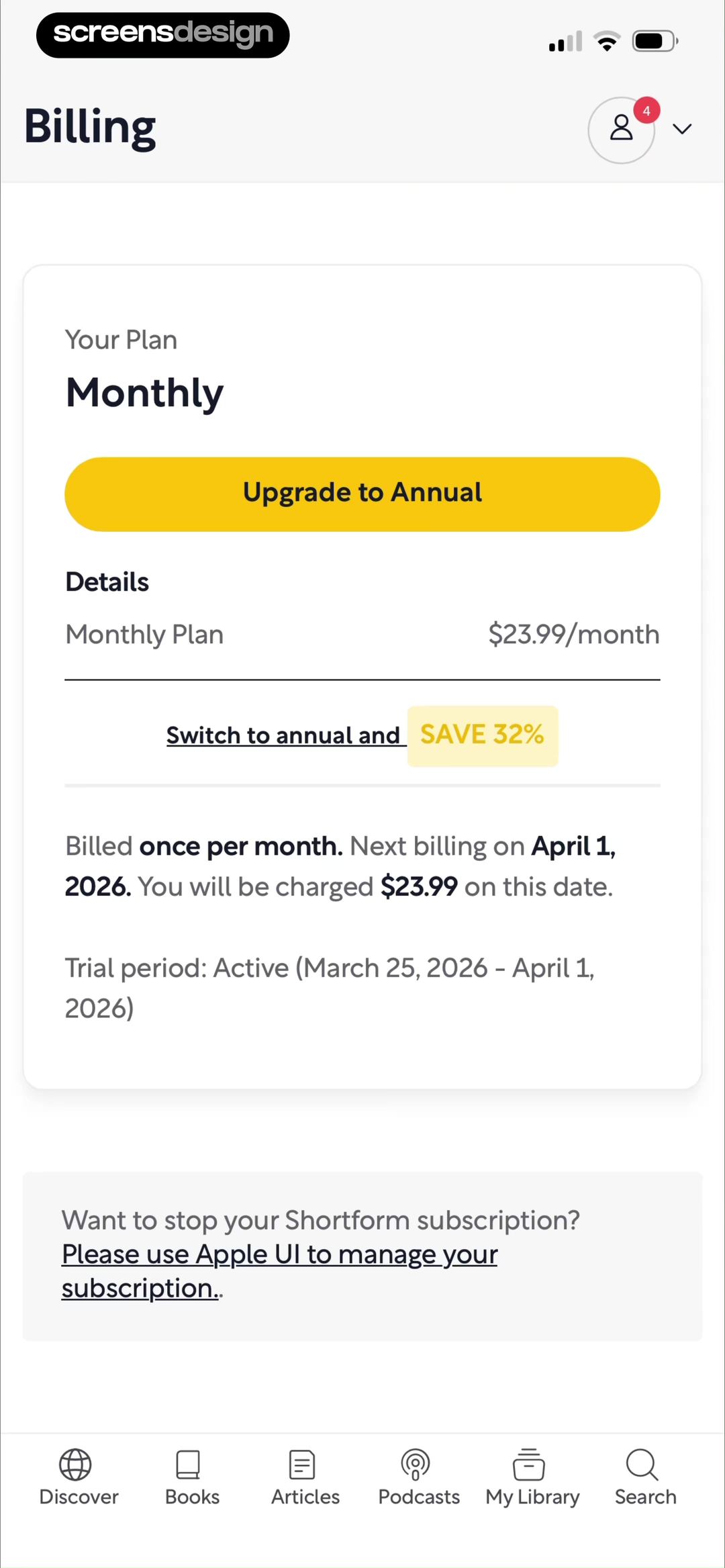
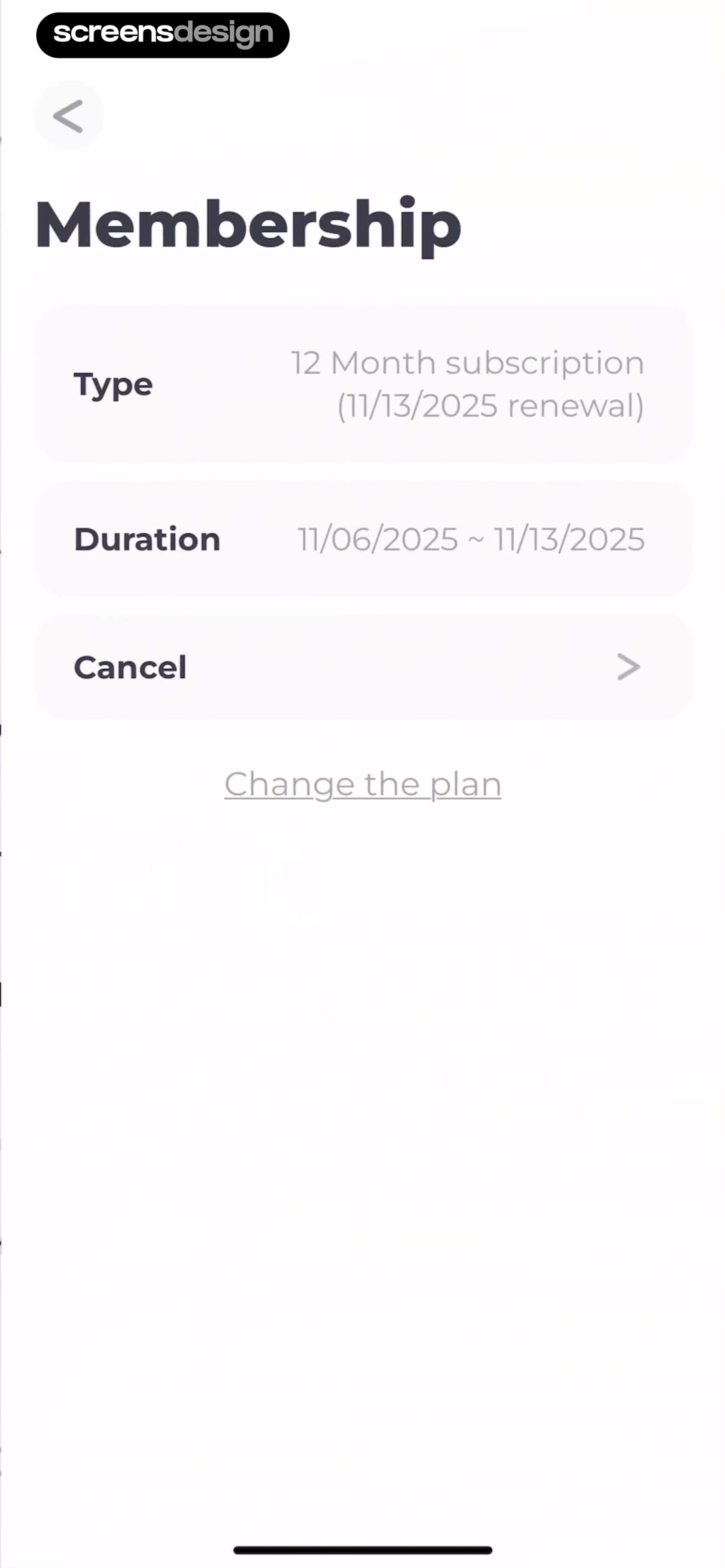
Shortform shows the current monthly price, next billing date, and a quantified annual saving. Routine Planner exposes the subscription type, renewal date, cancel action, and change-plan action together. These screens make plan fit a visible decision rather than forcing an all-or-nothing exit.
State the current plan first, then show alternatives with billing period, total charge, effective monthly price where helpful, and the date a change takes effect. Explain prorating, refunds, and retained access when they apply. Never preselect a more expensive tier inside a management flow.
Plan changes need recovery states. Cover pending App Store updates, failed billing, plan changes that take up to a day to appear, and users who manage billing on another platform. Preserve the current entitlement until the billing source confirms a change.
03. Billing control
Put the next charge and the management route in plain view.
Trust erodes when renewal information feels deliberately difficult to find.
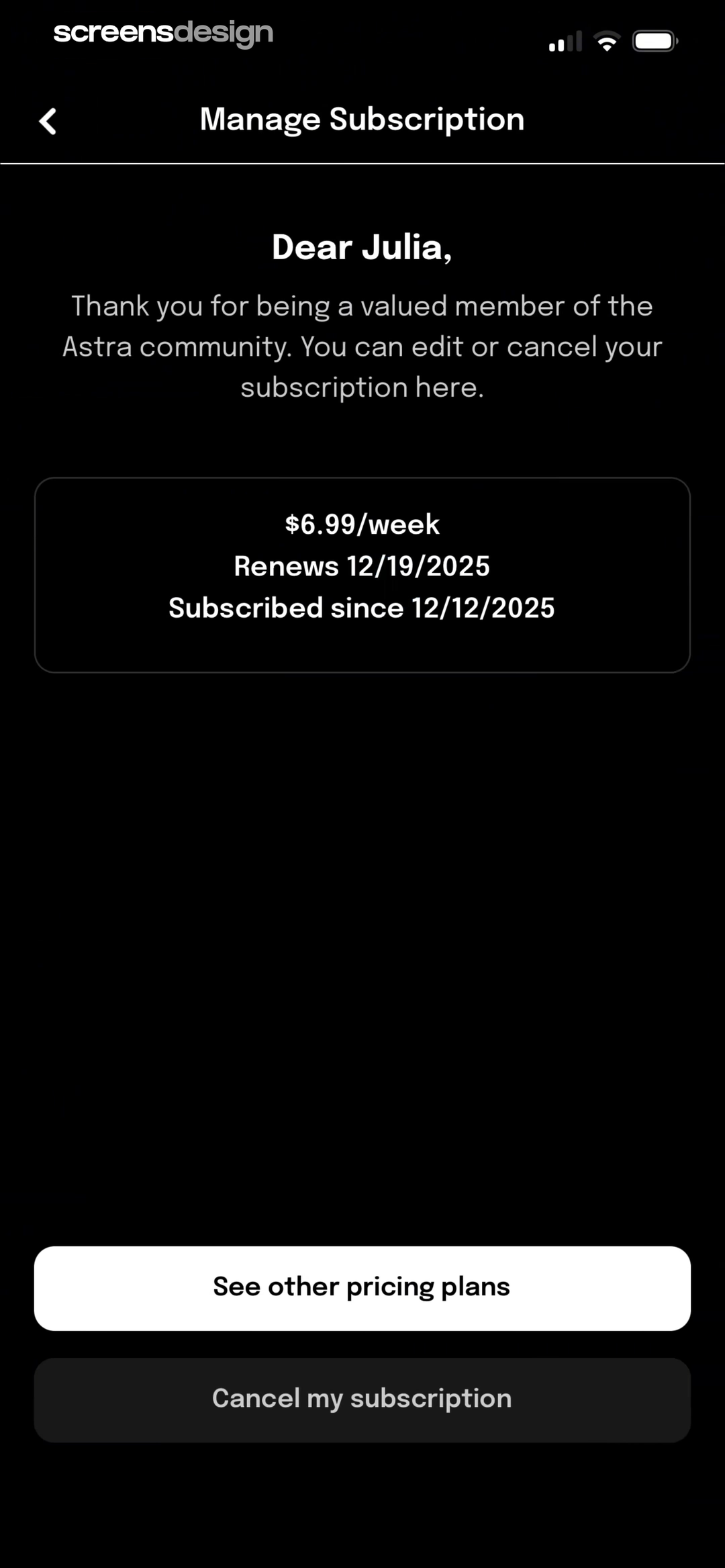
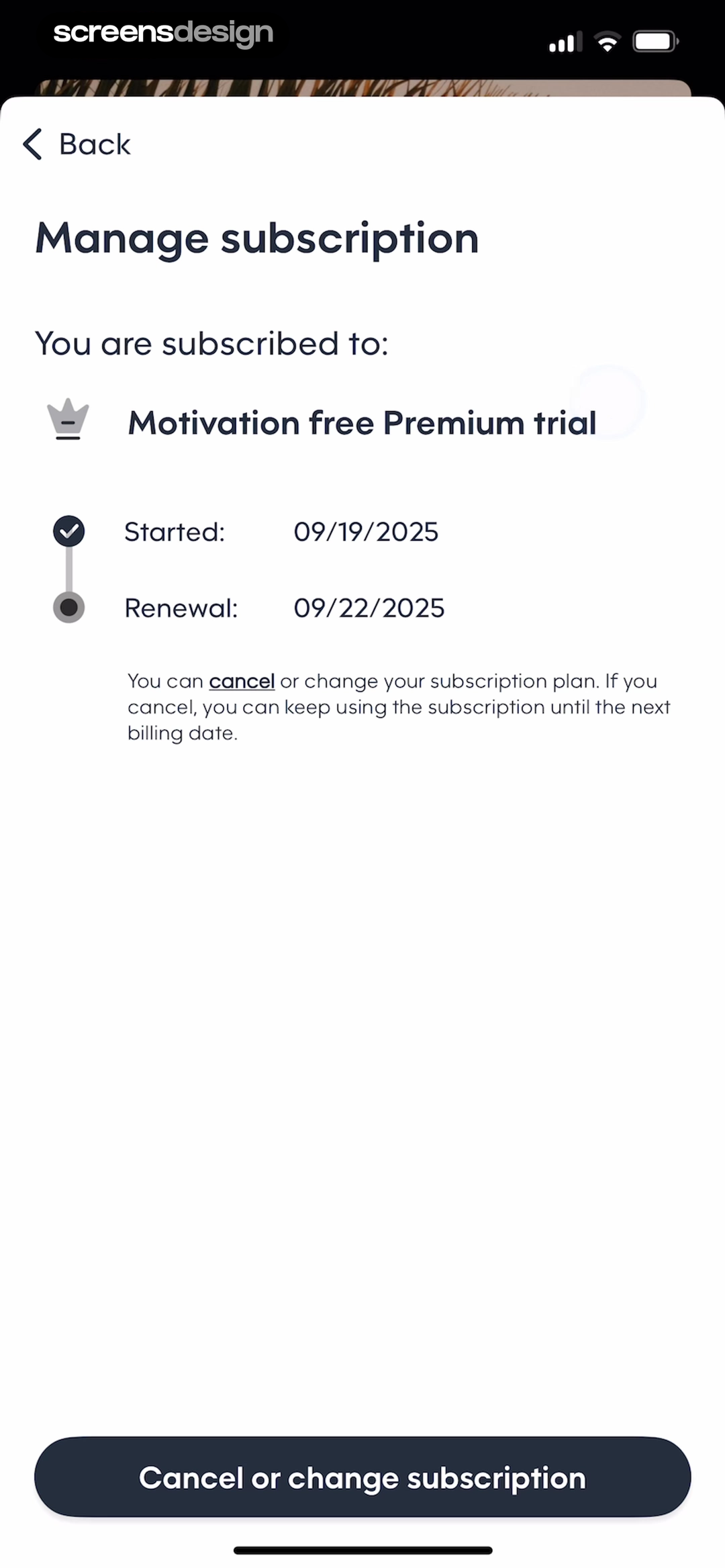
Astra shows the weekly price, renewal date, subscribed-since date, other pricing plans, and cancellation route. Motivation shows trial start and renewal dates and explains that cancellation preserves access until the next billing date.
Use exact dates and prices. Name whether the state is trialing, active, canceled, grace period, paused, or expired. Link directly to the platform or account surface that owns billing. If the app cannot cancel on the user's behalf, say so without implying that uninstalling will stop payment.
Test timezone, locale, taxes, family plans, promotional prices, pending renewals, and subscriptions bought on the web. A date without timezone context can still surprise people. A price without billing period is not meaningful disclosure.
04. Benefit memory
Remind subscribers what their tier changes in the product.
Benefits are easier to judge when they are tied to settings and current limits.
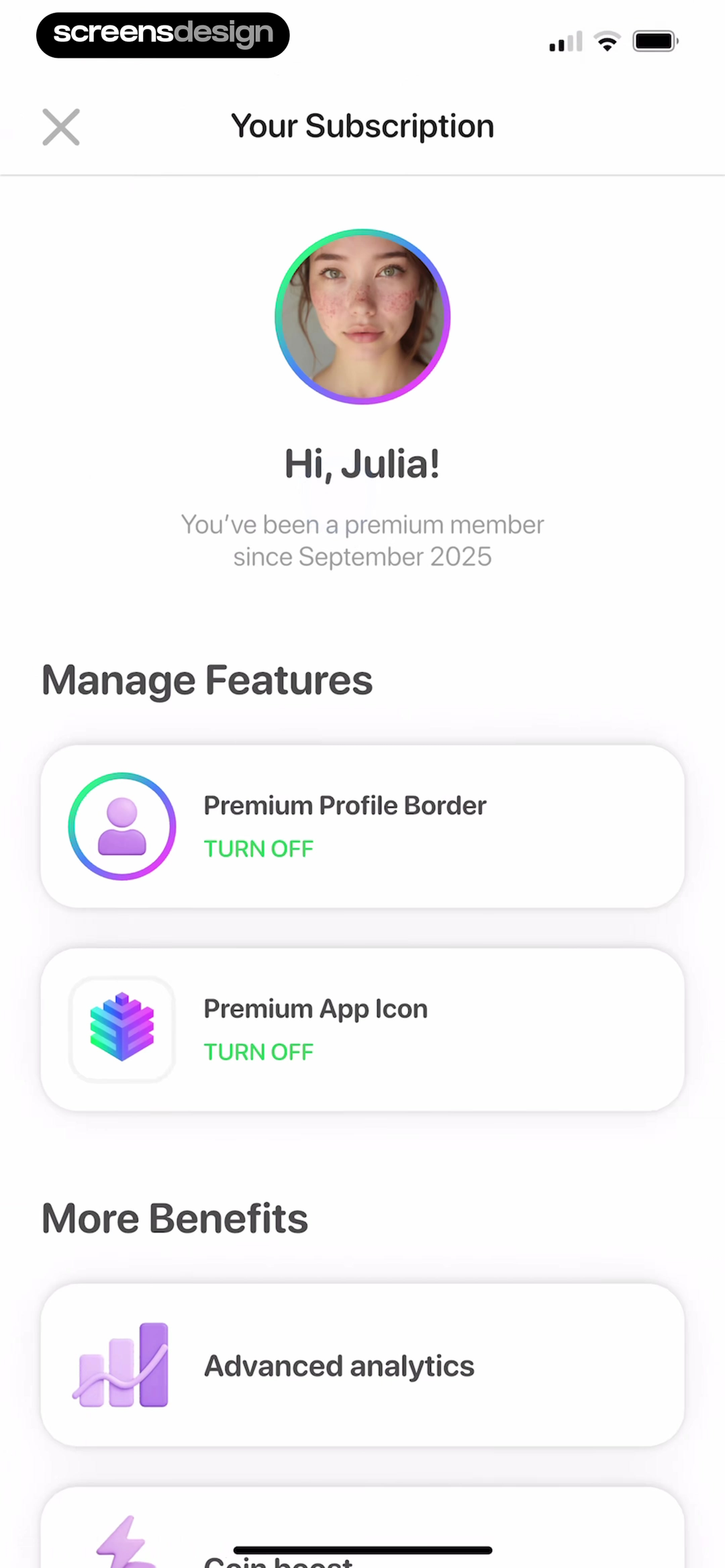
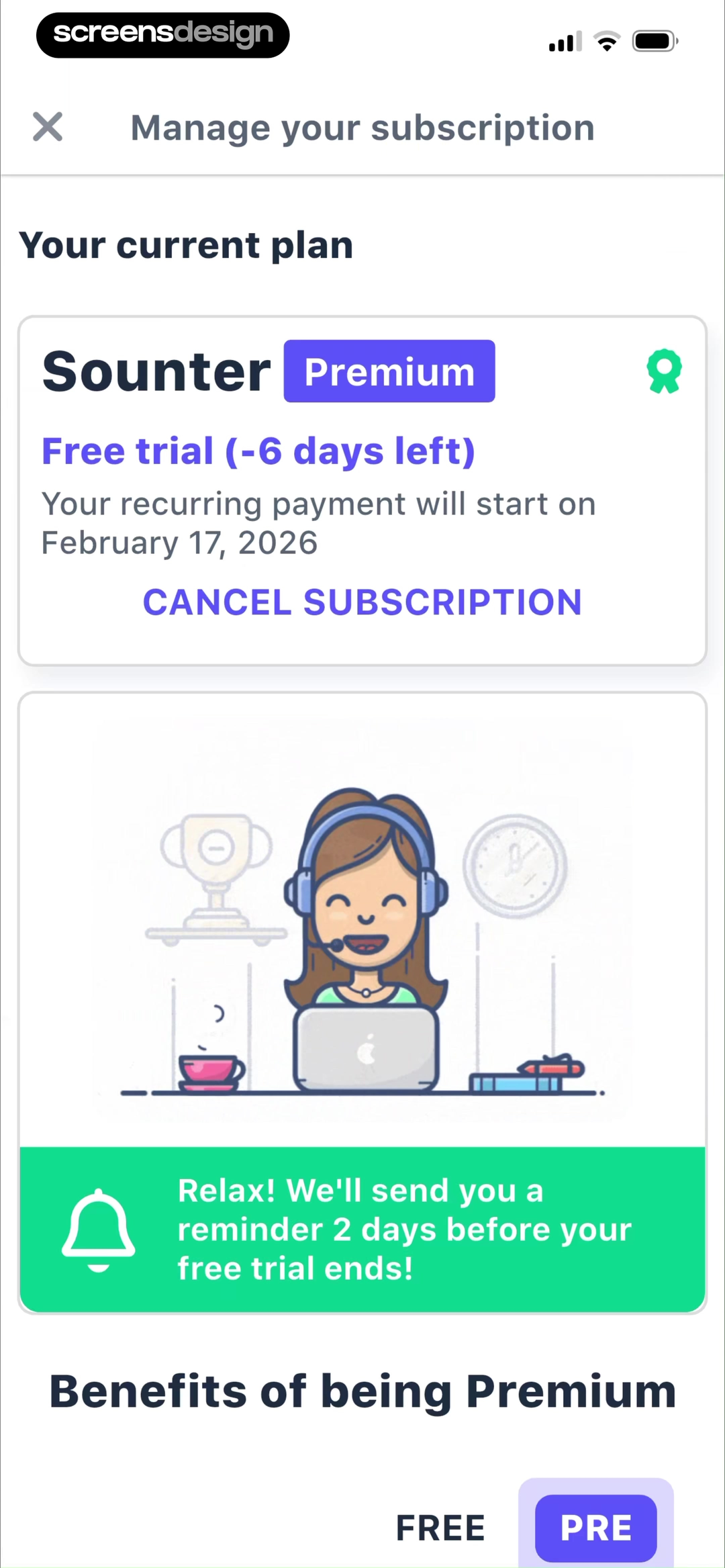
Focus Tree lets a premium member manage visible features such as a profile border and app icon while listing analytics and coin benefits. Sounter combines days remaining, the recurring-payment date, a promised reminder, and a free-versus-premium comparison.
Group benefits by the jobs people recognize, not by internal feature names. Distinguish used, available, and newly added benefits. If the product promises a renewal reminder, show when and through which channel it will arrive, then keep the same information available in subscription settings.
Do not inflate value with duplicate bullets or inaccessible future features. If a benefit requires another permission, device, or usage threshold, state that condition. Keep marketing claims separate from account facts such as price and renewal.
05. Downgrade consequences
Explain what changes without using loss as a threat.
A clear downgrade preview supports an informed decision and a safer return path.
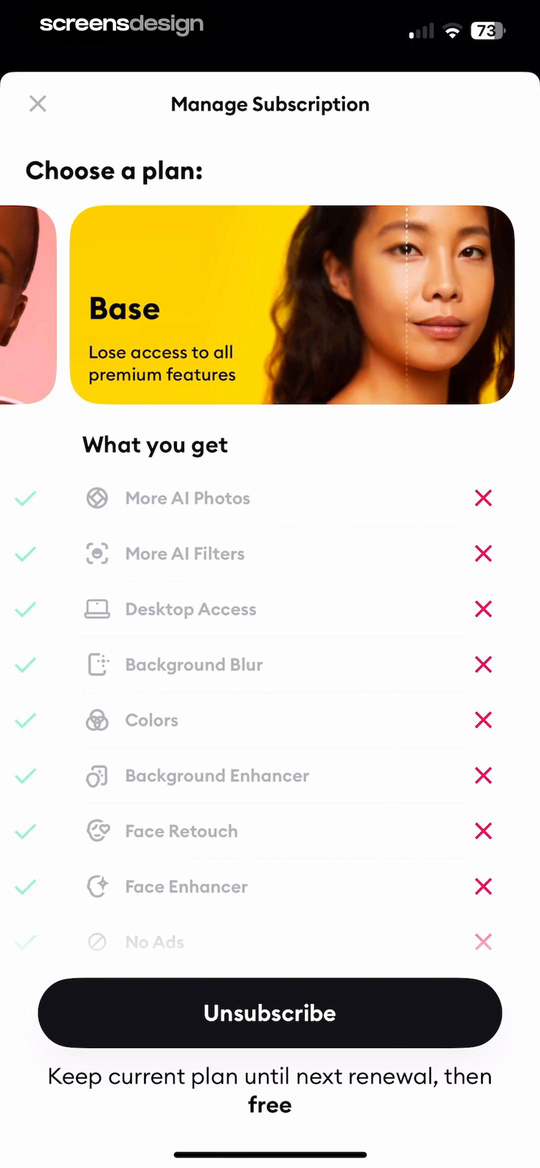
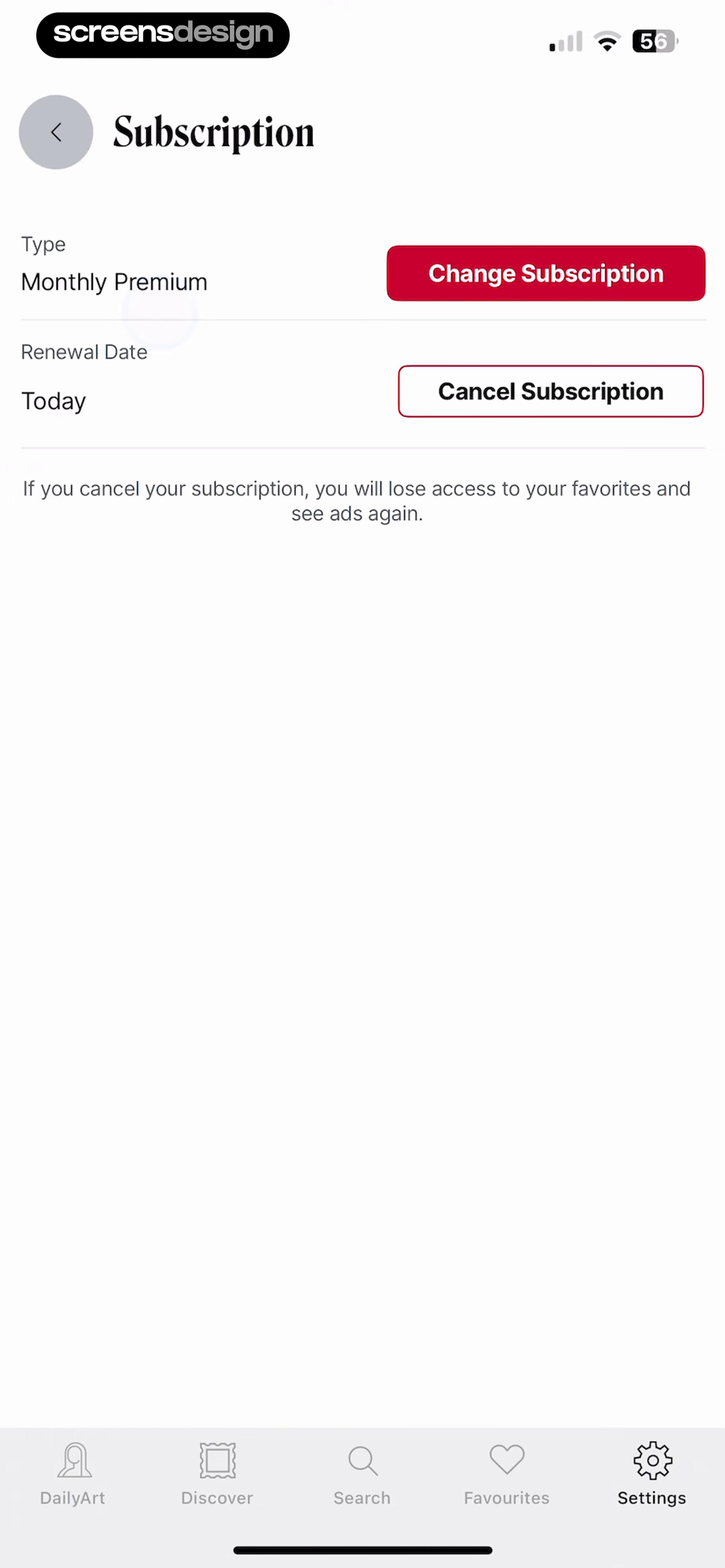
Remini's plan chooser names the premium photo capabilities lost on the Base plan. DailyArt says cancellation removes premium access to favorites and brings ads back. Both expose consequences, although consequence copy still needs a neutral tone and a clear effective date.
List changes by data, capability, limits, and timing. Clarify whether saved work remains readable, editable, exportable, or deleted. If access continues until the end of the paid period, say so. Offer export or backup before a tier removes access to user-created data.
Never imply that personal data will disappear unless that is true. Cancellation, downgrade, and account deletion are different actions. Test resubscription so prior work and settings return as promised.
Retention system
Map the subscription relationship before rewriting cancellation.
Churn prevention begins in the product states that explain value, usage, billing, and control long before a user taps Cancel.
Start with a lifecycle map from first paid value through renewal, plan management, payment failure, downgrade, cancellation, and post-cancellation access. For every state, record what the subscriber owns, what changes next, the effective date, and the safest available action. This exposes contradictions such as an annual plan described as monthly, a downgrade that appears immediate but takes effect later, or a cancellation screen that cannot explain remaining access.
Segment the map by customer state instead of sending everyone through one save flow. A new subscriber who never reached first value needs setup help. A frequent user facing a price mismatch needs a plan option. A customer leaving because a project ended may need pause or a clear cancellation, not persuasion. Payment failure, duplicate purchase, family sharing, and App Store billing each require different support and recovery paths.
Instrument the transitions, not only the final cancellation event. Track whether people can open subscription settings, understand their plan, complete a downgrade, recover billing, accept or reject an offer, and confirm the final state. Review support contacts and refund reasons beside those events. A lower cancellation completion rate is not automatically a success if confusion, failed controls, or involuntary renewals increased.
Use the cancellation and win-back examples to design the final decision, then audit renewal reminders so billing never arrives as a surprise.
- The current plan, price, billing interval, and renewal date agree everywhere.
- Pause, downgrade, support, and cancellation appear only when they are real options.
- Every action states when it takes effect and what access remains.
- App Store and direct-billing customers receive the correct management route.
- Success metrics include comprehension, support load, refunds, and successful control completion.
Measurement
Measure retained value, not obstruction.
A save flow is healthy only when subscribers understand the choice and continue receiving value they actually want.
Build cohorts around the reason and remedy: incomplete setup, low usage, price mismatch, temporary pause, payment failure, missing capability, or finished need. Compare later product use, renewal, refund, support, and repeat cancellation by cohort. A customer who accepts a discount and leaves one billing cycle later is different from a customer who changes plans and keeps using the product.
Add guardrails for cancellation completion time, repeated clicks, failed management actions, charge disputes, refunds, negative support contacts, and re-entry into the cancellation flow. Review screen recordings and support language when these rise. Never interpret a lower completion rate alone as improved retention, because extra friction can suppress the event while making the relationship worse.
Run copy and layout tests only after state accuracy is reliable. Segment new and established subscribers, direct and store billing, monthly and annual plans, and voluntary and involuntary churn. Keep legal, accessibility, and customer-support owners involved so an experiment cannot hide a required control or make the effective date ambiguous.
Review checklist
Audit the subscription from first charge to voluntary exit.
Create trialing, monthly, annual, paused, canceled, expired, grace-period, and resubscribed accounts. Confirm that every state has an accurate plan label, price, renewal or expiry date, management destination, and product access.
Review benefit language against the actual entitlement service. Test App Store, web, family, promotional, and restored purchases. Check that cancellation never becomes account deletion and that exports remain available when promised.
- Current plan, billing period, next charge, and renewal date are visible.
- Usage or completed value is tied to the paid plan.
- Monthly, annual, upgrade, and downgrade effects are comparable.
- Cancellation and plan change are reachable from subscription settings.
- Trial reminders state their date and channel.
- Downgrade copy distinguishes lost features from retained user data.
- Platform-owned billing links lead to the correct destination.
- Resubscription restores eligible work and settings.
Questions and answers
App subscription churn questions
What is app subscription churn?
Subscription churn is the loss of paying subscribers through cancellation, failed renewal, downgrade, or non-renewal. Product teams should separate voluntary reasons from billing failure and involuntary expiration.
Can design reduce subscription churn?
Design can reduce avoidable churn caused by unclear value, confusing billing, missing plan controls, or poor recovery. It cannot prove or guarantee retention without product analytics and user research.
What should a subscription management screen show?
Show plan name, billing period, price, next charge or expiry date, current benefits or usage, plan-change options, billing owner, cancellation route, and what happens afterward.
Should cancellation be difficult to find?
No. Hiding cancellation damages trust and can create regulatory risk. A clear exit can still include a neutral summary, feedback question, pause, downgrade, or relevant alternative.
How should a downgrade protect user data?
State which capabilities change, when the change takes effect, and whether saved work remains readable or exportable. Offer export before access is removed where appropriate.
Apps referenced in this page
Open the products behind the examples.
 Courtney Black FitnessWeekly Workouts & Meal Plans
 SnipdHighlight & chat with episodes
 Shortform Daily Book SummariesMicro Learning & Podcasts
 Routine Planner, Habit TrackerDaily Time Management for ADHD
 AstraAstrology & Compatibility
 MotivationInspirational positive widgets
 Focus TreeStudy with friends
 Language ReactorLearn with the power of Music
 ReminiEnhance quality and restore!
 DailyArtDaily Dose of Art History
2,715 apps in the top charts.Ask them anything.
Search real app flows, compare the screens around each decision, and turn stronger references into your own product.