Subscription reactivation
10 Subscription Reactivation UX Examples
A useful reactivation flow explains why access is inactive, preserves account context, and makes the correct recovery route obvious.
Reactivation applies when a former subscriber comes back after cancellation, expiry, billing failure, or a period of inactivity. It is different from restore purchase, which recovers an entitlement that should already exist, and from a first-time paywall, which has no prior paid context.
This article examines ten recorded mobile screens from ten product moments. They cover the visible states, actions, commercial details, and recovery paths that shape subscription reactivation. Each example is linked to the exact recorded screen so designers can inspect the surrounding product context rather than treating a cropped image as a complete flow.
The examples reveal what the interfaces display, not why a team selected the pattern or whether it improved conversion, retention, revenue, or satisfaction. Use them to sharpen a product hypothesis, then validate the complete state model with billing data, entitlement tests, support evidence, and research with users.
01. Acknowledge the inactive account
Acknowledge the inactive account.
Returning users should see their real plan state before promotional copy.
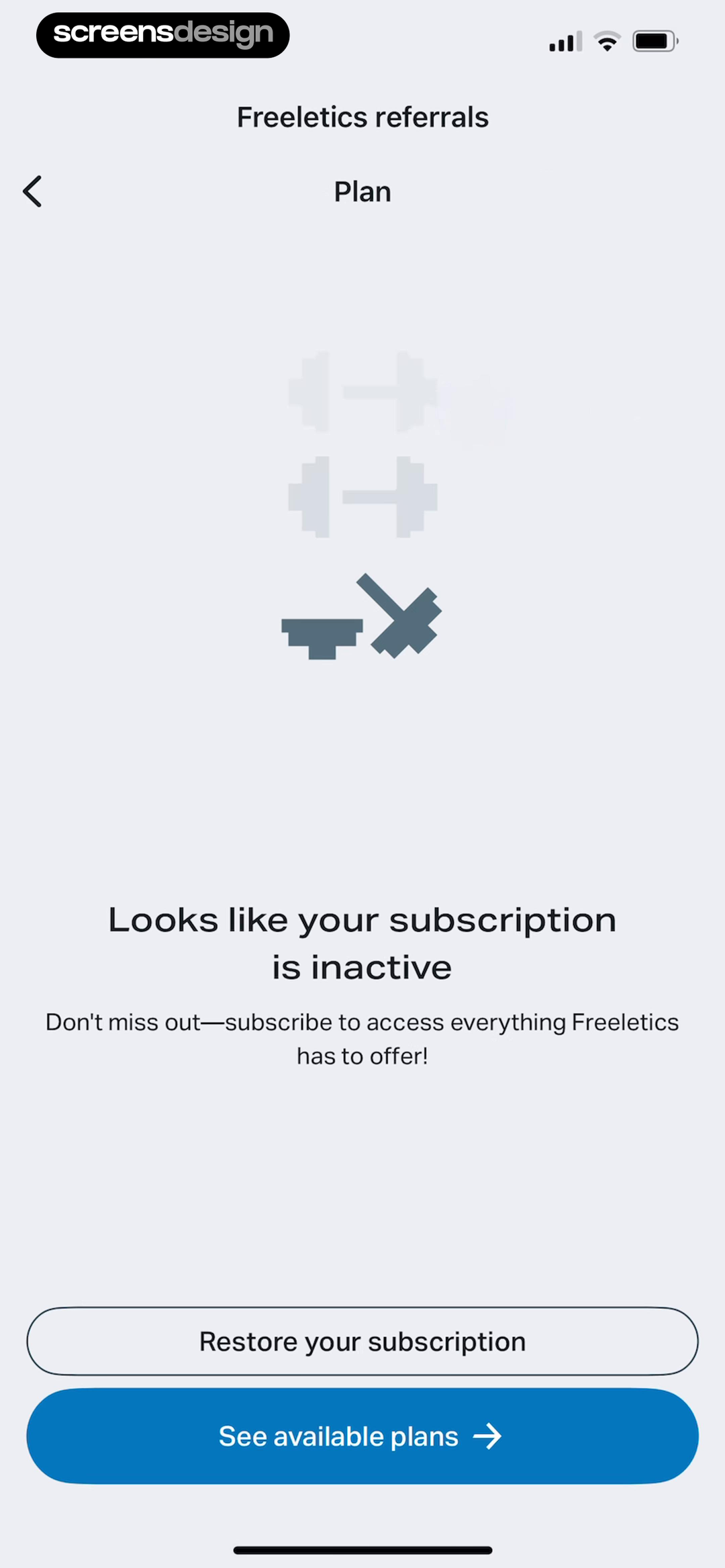
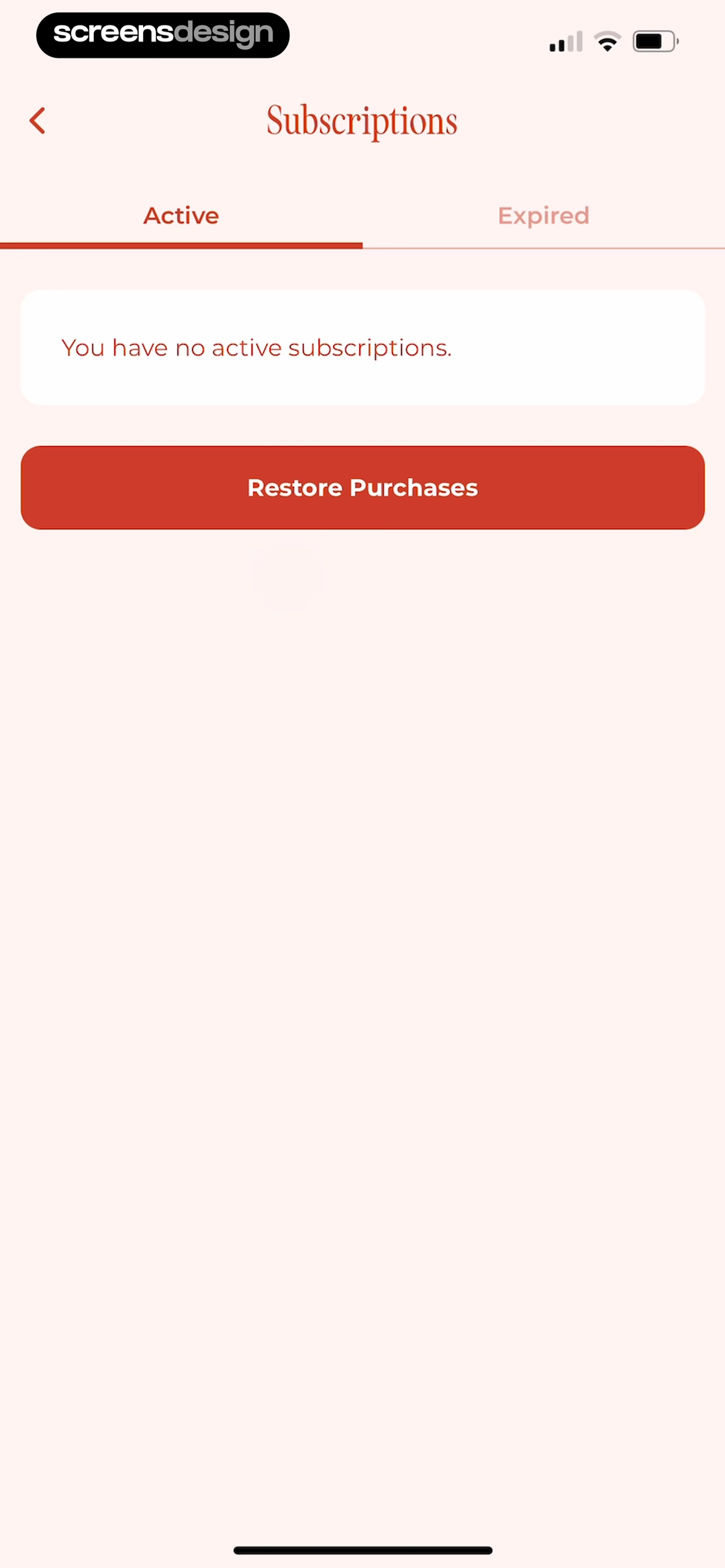
In Freeletics: Workouts & Fitness, the interface names "Freeletics referrals" and "Looks like your subscription is inactive". WeGLOW: Home Workout for Women pairs "You have no active subscriptions" with "Restore Purchases". Together, the two recorded screens make acknowledge the inactive account concrete: Returning users should see their real plan state before promotional copy. The comparison is useful as interface evidence, but it does not show which product converted, retained, or satisfied more users.
Name the previous or inactive status, affected features, last access date when useful, and whether saved work remains. Avoid welcoming someone back with a checkout before the account has been checked. Put the account fact before persuasive language, keep the primary action tied to the user's current job, and show a safe route out. When a price, date, allowance, or entitlement is involved, it should come from the same verified source that enforces the product behavior.
Test signed-out returns, changed Apple or Google accounts, migrated subscriptions, and a user with multiple workspaces. Write loading, empty, pending, success, failure, and stale-state copy before polishing the ideal screen. Preserve user input and navigation across external checkout or account management, then refresh the interface without requiring a restart.
02. Choose the right recovery verb
Choose the right recovery verb.
Restore, renew, resubscribe, update payment, and view plans solve different problems.
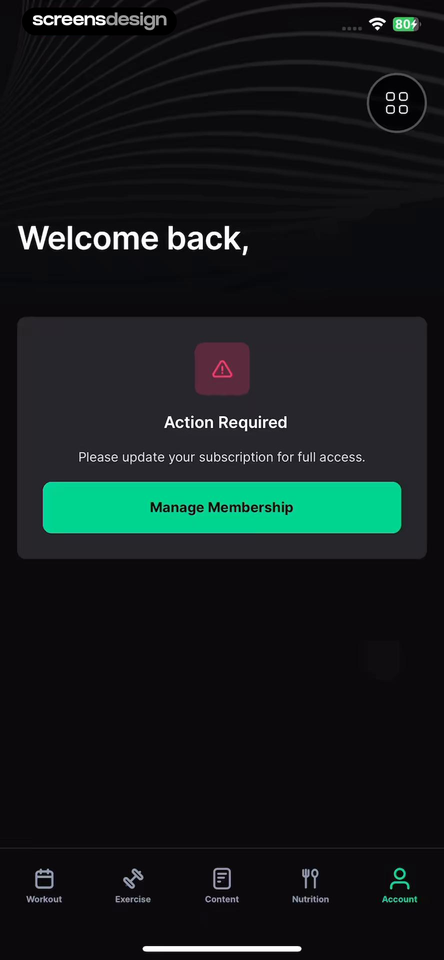
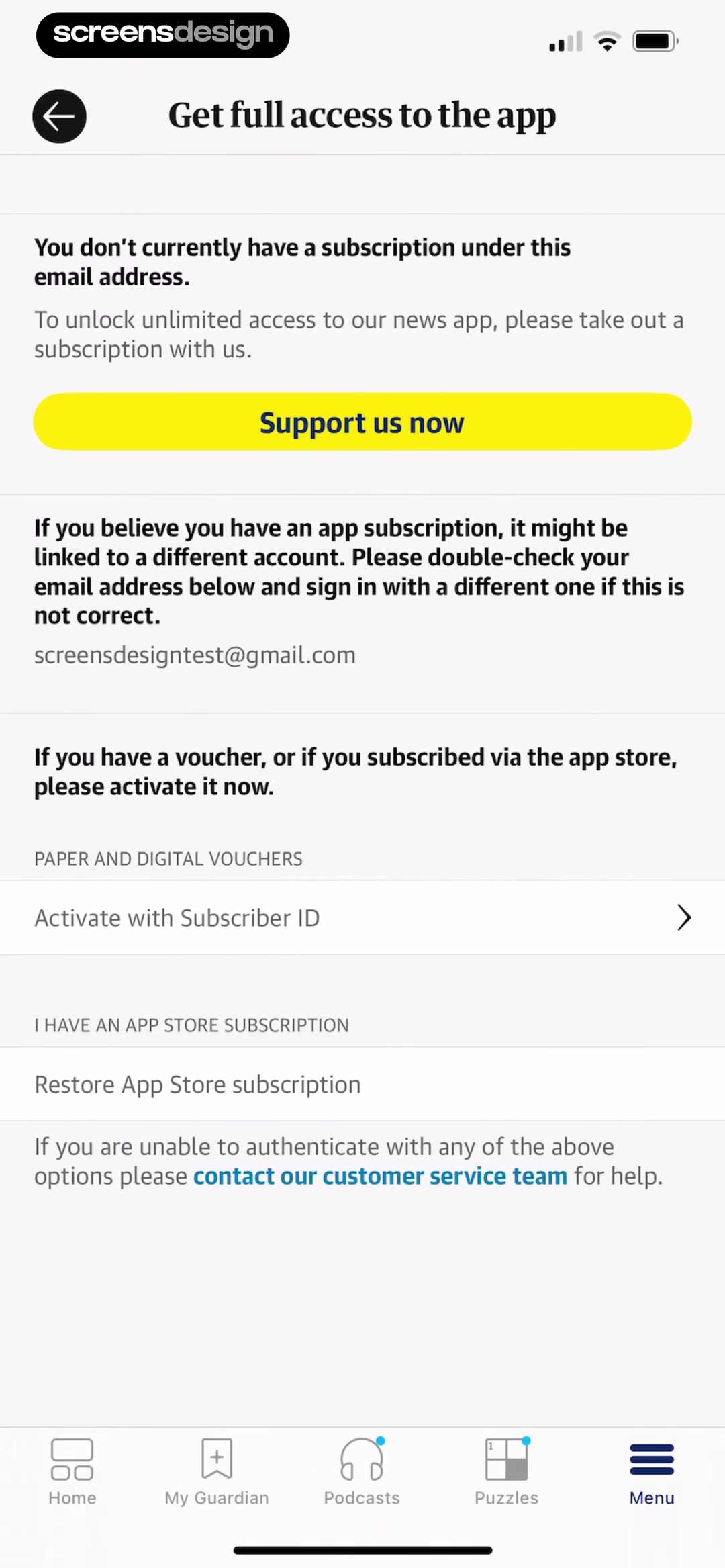
In STNDRD Workout & Fitness Plans, the interface names "Welcome back," and "Action Required". The Guardian - US & World News pairs "Get full access to the app" with "You don't currently have a subscription under this email address". Together, the two recorded screens make choose the right recovery verb concrete: Restore, renew, resubscribe, update payment, and view plans solve different problems. The comparison is useful as interface evidence, but it does not show which product converted, retained, or satisfied more users.
Map each action to the underlying state. An inactive canceled plan can reactivate, a missing receipt can restore, and a failed renewal should update payment. Explain store handoffs before leaving the app. Put the account fact before persuasive language, keep the primary action tied to the user's current job, and show a safe route out. When a price, date, allowance, or entitlement is involved, it should come from the same verified source that enforces the product behavior.
Never encourage a second purchase while entitlement verification is incomplete. Write loading, empty, pending, success, failure, and stale-state copy before polishing the ideal screen. Preserve user input and navigation across external checkout or account management, then refresh the interface without requiring a restart.
03. Reconnect the offer to prior value
Reconnect the offer to prior value.
A returning subscriber already knows the product and needs a reason to resume now.
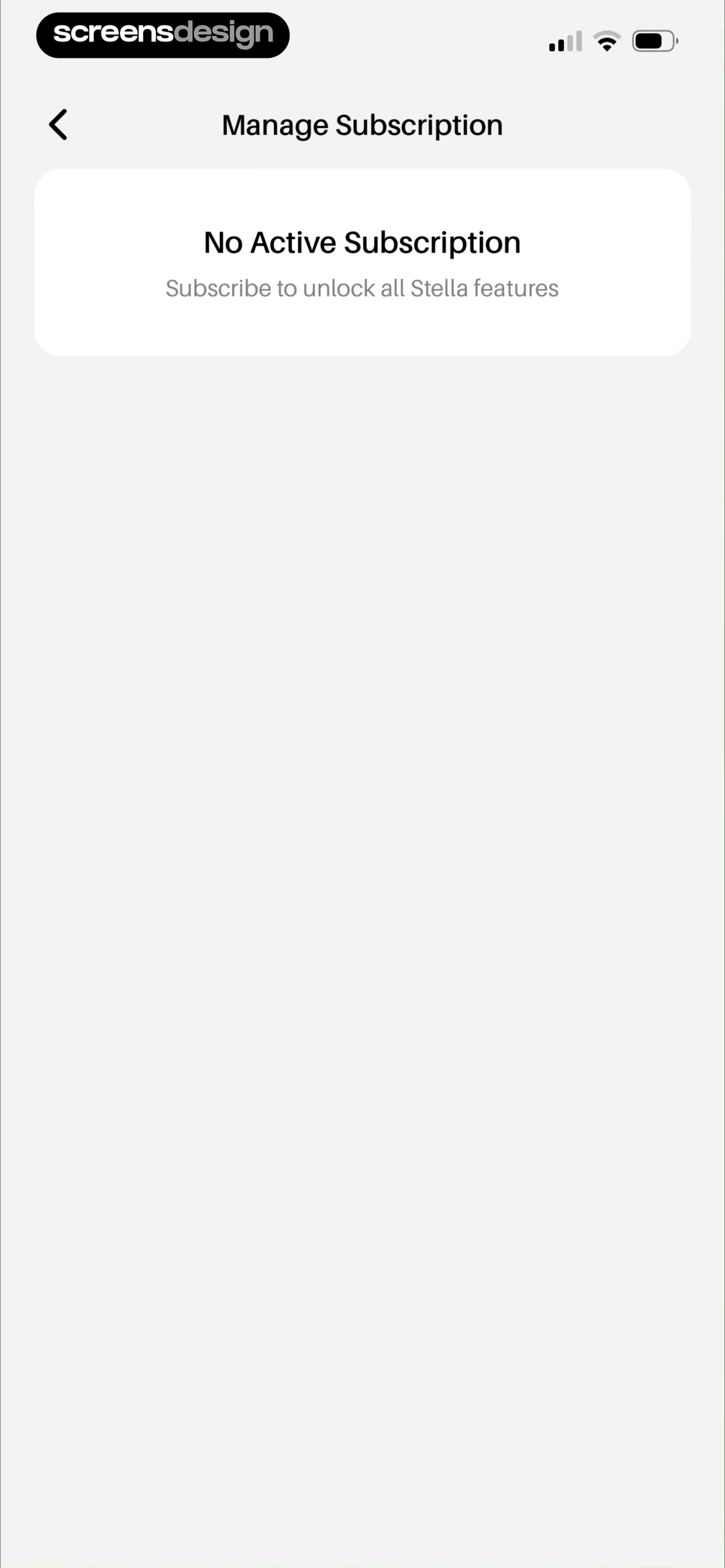
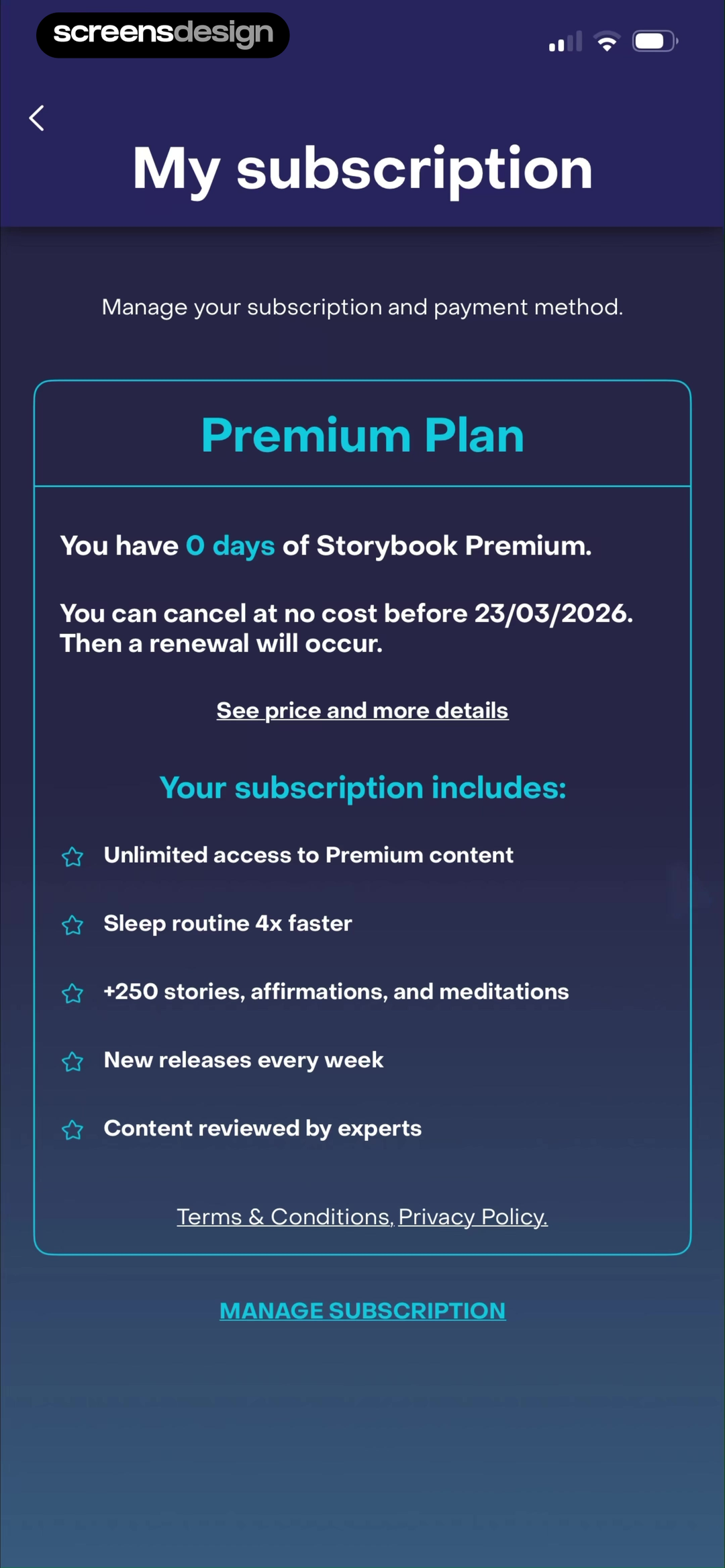
In Stella - Manifest Anything, the interface names "Manage Subscription" and "No Active Subscription". Storybook: Sleep & Meditation pairs "My subscription" with "Manage your subscription and payment method". Together, the two recorded screens make reconnect the offer to prior value concrete: A returning subscriber already knows the product and needs a reason to resume now. The comparison is useful as interface evidence, but it does not show which product converted, retained, or satisfied more users.
Show relevant saved progress, recently added capability, plan changes, or the task they attempted. Do not rely on a generic feature list that ignores their history. Put the account fact before persuasive language, keep the primary action tied to the user's current job, and show a safe route out. When a price, date, allowance, or entitlement is involved, it should come from the same verified source that enforces the product behavior.
Keep personalization bounded and respectful. Do not expose sensitive usage on a shared device or in a notification. Write loading, empty, pending, success, failure, and stale-state copy before polishing the ideal screen. Preserve user input and navigation across external checkout or account management, then refresh the interface without requiring a restart.
04. Preserve continuity after payment
Preserve continuity after payment.
The post-purchase destination is part of reactivation design.
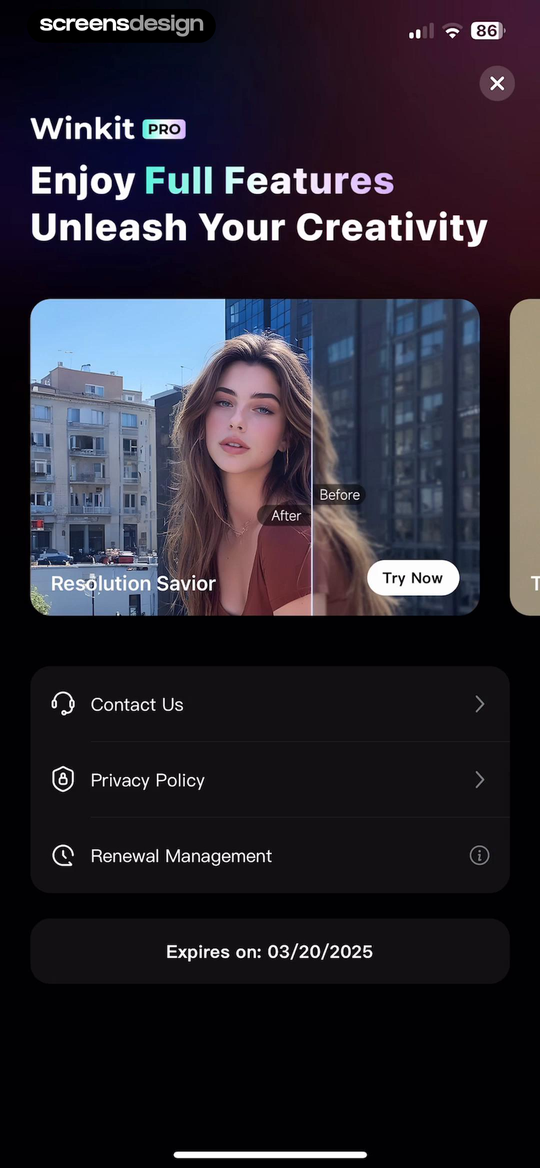
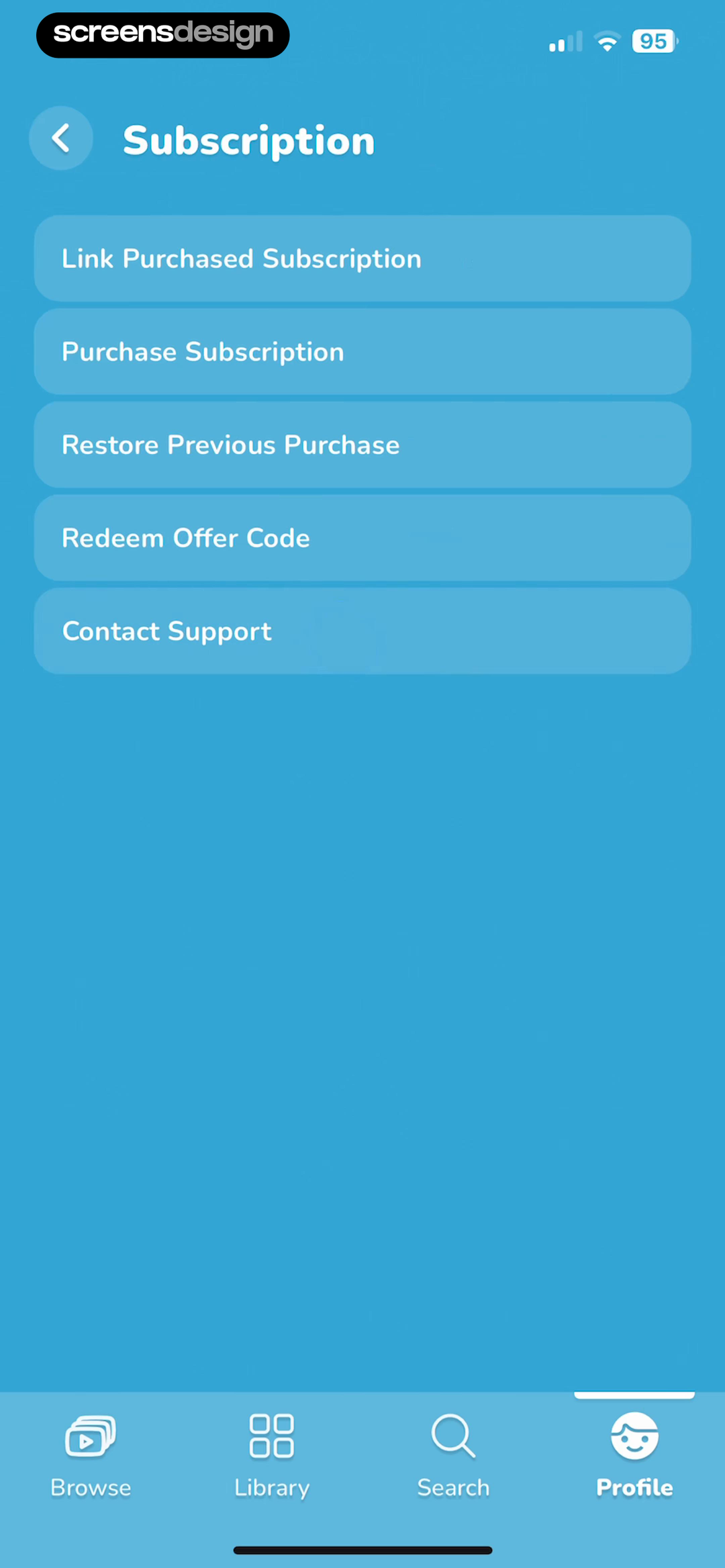
In Winkit - AI Video Enhancer, the interface names "Winkit PRO" and "Enjoy Full Features". Hearty App: Everyday Bonding pairs "Link Purchased Subscription" with "Purchase Subscription". Together, the two recorded screens make preserve continuity after payment concrete: The post-purchase destination is part of reactivation design. The comparison is useful as interface evidence, but it does not show which product converted, retained, or satisfied more users.
Return to the project, lesson, plan, library item, or tool that caused the return. Refresh the entitlement in place and confirm the active plan, renewal date, and management route. Put the account fact before persuasive language, keep the primary action tied to the user's current job, and show a safe route out. When a price, date, allowance, or entitlement is involved, it should come from the same verified source that enforces the product behavior.
Handle purchase pending, interrupted authentication, duplicate taps, and success arriving while the app is backgrounded. Write loading, empty, pending, success, failure, and stale-state copy before polishing the ideal screen. Preserve user input and navigation across external checkout or account management, then refresh the interface without requiring a restart.
05. Make decline a valid outcome
Make decline a valid outcome.
Not every returning user is ready to subscribe again.
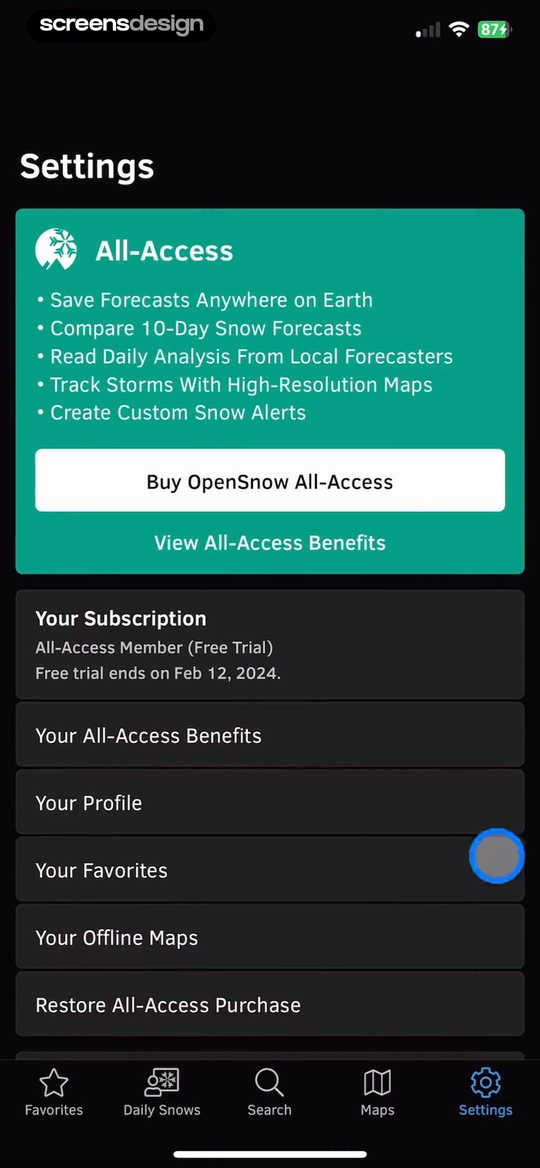
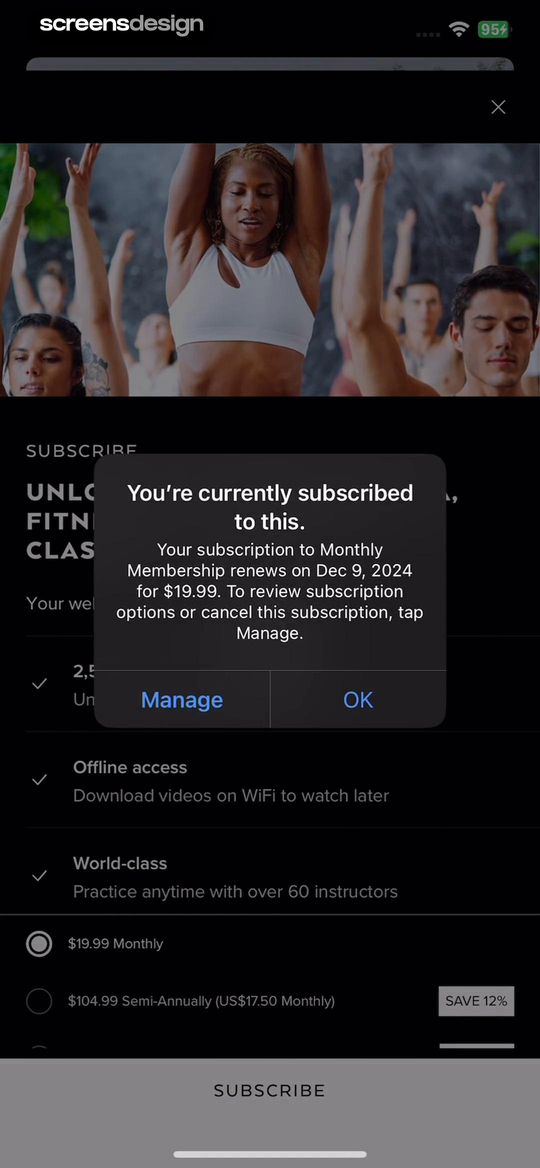
In OpenSnow, the interface names "Save Forecasts Anywhere on Earth" and "Compare 10-Day Snow Forecasts". ALO Wellness Club pairs "UNLOCK FITNESS CLASSES" with "Your wellness journey starts here". Together, the two recorded screens make make decline a valid outcome concrete: Not every returning user is ready to subscribe again. The comparison is useful as interface evidence, but it does not show which product converted, retained, or satisfied more users.
Offer the real free experience, export, account management, or a safe exit where the product supports it. Store preferences so the same modal does not interrupt every visit. Put the account fact before persuasive language, keep the primary action tied to the user's current job, and show a safe route out. When a price, date, allowance, or entitlement is involved, it should come from the same verified source that enforces the product behavior.
Measure later voluntary returns separately from repeated paywall exposure. Write loading, empty, pending, success, failure, and stale-state copy before polishing the ideal screen. Preserve user input and navigation across external checkout or account management, then refresh the interface without requiring a restart.
Implementation
Build the interface from account and entitlement truth.
The visual state is reliable only when billing, account identity, product rules, and recovery behavior agree.
Build the entry decision from current entitlement, last paid plan, cancellation effective date, billing status, purchase platform, account identity, and the requested feature. Do not infer inactivity from a missing local flag. Verify the receipt or backend entitlement before deciding that a subscription must be repurchased.
Keep reactivation idempotent. Multiple taps, slow store callbacks, and a purchase completing on another device must converge on one active entitlement. Disable duplicate checkout while preserving a visible pending state and a recovery route if the callback never arrives.
Persist the return destination and any unsaved input before checkout. On success, refresh account capabilities, dismiss the gate, and restore focus to the original task. On failure, distinguish user cancellation, store unavailability, declined payment, and verification delay so each state receives an accurate action.
When price or plan changed since the last subscription, show the current commercial terms as a new decision. Do not imply that an old price, trial, or entitlement will return unless the billing system confirms it.
- Document every account, billing, entitlement, and transition state before implementation.
- Keep prices, dates, limits, products, and available actions sourced from verified data.
- Preserve the initiating task through checkout, restore, external management, and failure.
- Use idempotent purchase and entitlement updates so retries cannot duplicate value.
- Provide accessible status, focus management, error copy, and a safe exit.
Measurement
Measure whether people recover the task, not only whether they pay.
Commercial events need product-completion and trust guardrails.
Separate inactive-account views, restore attempts, payment-update routes, plan views, checkout starts, confirmed activations, and resumed-task completion. Attribute reactivation only after the entitlement service confirms active access.
Review reactivation rate with restore success, duplicate-purchase incidents, payment recovery, time to first repeated value, support contacts, refunds, and free-product continuation. A high purchase rate can hide confusion if users buy twice or cannot resume their work.
Compare reasons for return and lapse through privacy-conscious research. The interface patterns show possible choices, but they do not establish that a particular message caused retention.
Review checklist
Review the complete state before shipping.
Test the screen with new, active, trialing, pending, canceled, expired, restored, offline, and wrong-account fixtures where they apply. Exercise every external handoff and return path with slow callbacks and interrupted network access.
Compare the rendered copy with the billing catalog and entitlement service. Then repeat the task with VoiceOver or TalkBack, larger text, reduced motion, localized prices and dates, narrow screens, and a user who dismisses the offer.
- Inactive status and affected access are explicit.
- Restore, renew, payment update, and view plans are distinct.
- The current price and renewal terms are shown before commitment.
- Saved projects and progress remain visible.
- Checkout is idempotent and prevents duplicate purchases.
- Success refreshes entitlement and resumes the original task.
- Decline and free-product routes behave predictably.
Questions and answers
Subscription reactivation questions
What is subscription reactivation UX?
It is the account, offer, purchase, and return flow that helps a former subscriber regain paid access after cancellation, expiry, or another inactive state.
Is reactivation the same as restore purchase?
No. Restore recovers a purchase that should already grant access. Reactivation creates a new active paid period.
What should happen after reactivation?
Confirm the active plan and renewal, refresh entitlement, and return the person to the saved task or content that prompted the purchase.
Should returning users receive another free trial?
Only when the billing rules and offer eligibility genuinely allow it. The interface must not promise an unavailable trial.
How do teams measure reactivation?
Measure confirmed entitlement activation and resumed product value beside restore errors, duplicate charges, refunds, support demand, and continued free use.
Apps referenced in this page
Open the products behind the examples.
 Freeletics: Workouts & FitnessHome & Gym AI Coach, Planner
 WeGLOW: Home Workout for WomenGym Exercises. Pilates. Yoga
 STNDRD Workout & Fitness PlansStrength Training Programs
 The Guardian - US & World NewsNews, sport, podcasts, puzzles
 Stella - Manifest AnythingManifest your dream life
 Storybook: Sleep & MeditationBedtime, Self Esteem, Relax
 Winkit - AI Video EnhancerHD Quality & AI Retouch
 Hearty App: Everyday BondingFun Ideas for Parents
 OpenSnowWeather Forecast + Snow Report
 ALO Wellness ClubYoga, Fitness & Mindfulness
2,715 apps in the top charts.Ask them anything.
Search real app flows, compare the screens around each decision, and turn stronger references into your own product.