Ad-free upgrades
10 Ad-Free Upgrade Screen Examples
The offer works best when it appears near a real ad experience, states the exact scope, and provides a clear recurring or one-time price.
Remove ads can be a standalone non-consumable purchase, part of a premium subscription, or one benefit in a larger plan. It may remove banners, interstitials, pre-rolls, rewarded ads, or only first-party placements. The screen must define the scope so the paid product matches the promise.
This article examines ten recorded mobile screens from ten product moments. They cover the visible states, actions, commercial details, and recovery paths that shape ad-free upgrades. Each example is linked to the exact recorded screen so designers can inspect the surrounding product context rather than treating a cropped image as a complete flow.
The examples reveal what the interfaces display, not why a team selected the pattern or whether it improved conversion, retention, revenue, or satisfaction. Use them to sharpen a product hypothesis, then validate the complete state model with billing data, entitlement tests, support evidence, and research with users.
01. Trigger the offer in context
Trigger the offer in context.
The prompt should follow an understandable ad experience or settings choice.
In iScreen - Widgets & Wallpaper, the interface names "Go Premium" and "Tap to Claim". FlightAware Flight Tracker pairs "Ad Removal Upgrades" with "Remove Ads". Together, the two recorded screens make trigger the offer in context concrete: The prompt should follow an understandable ad experience or settings choice. The comparison is useful as interface evidence, but it does not show which product converted, retained, or satisfied more users.
Let users reach ad-free options voluntarily and consider a contextual invitation after a disruptive placement. Do not increase ad annoyance simply to make the upgrade more attractive. Put the account fact before persuasive language, keep the primary action tied to the user's current job, and show a safe route out. When a price, date, allowance, or entitlement is involved, it should come from the same verified source that enforces the product behavior.
Cap frequency, honor dismissal, and test users who depend on rewarded ads for free value. Write loading, empty, pending, success, failure, and stale-state copy before polishing the ideal screen. Preserve user input and navigation across external checkout or account management, then refresh the interface without requiring a restart.


02. Define which ads disappear
Define which ads disappear.
No ads is a product claim with operational detail.
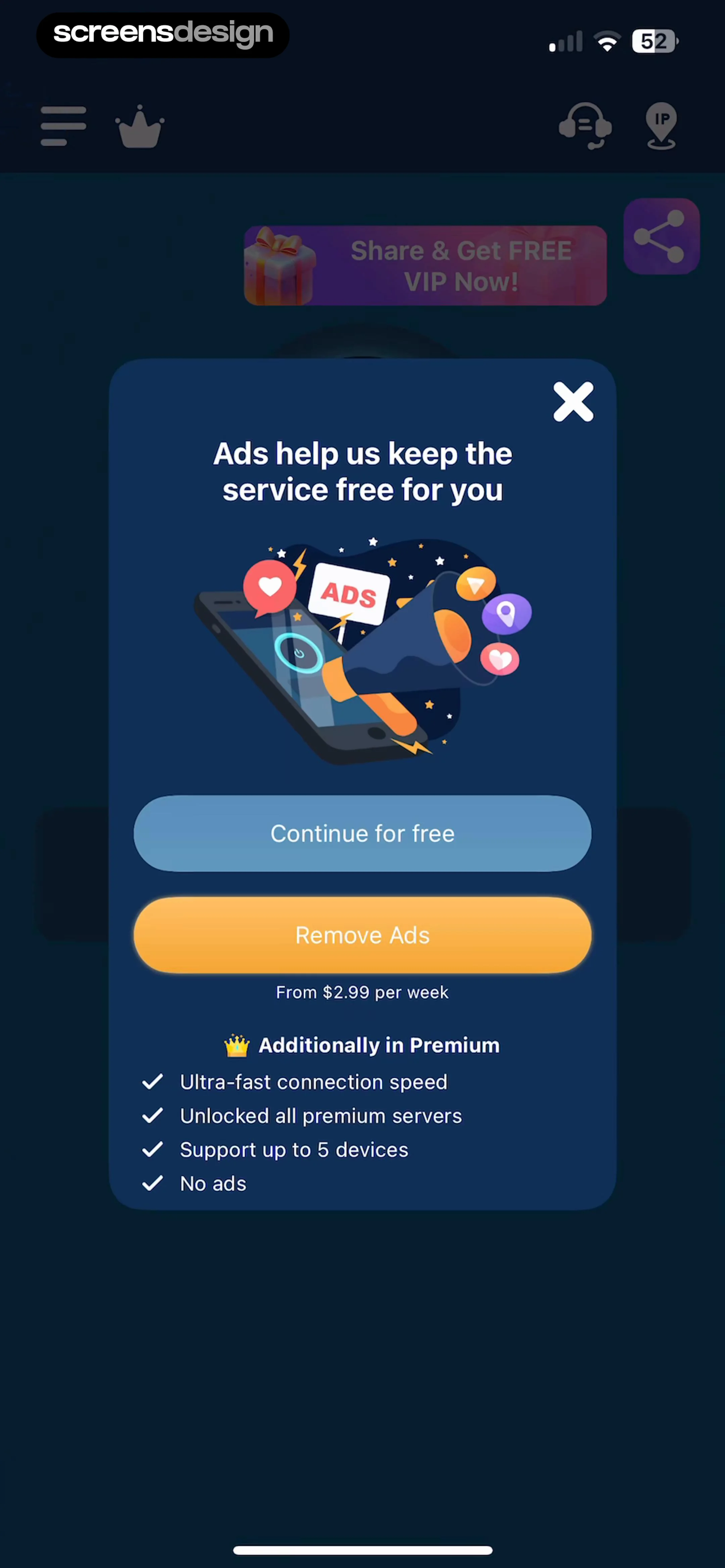
In MyRadar Accurate Weather Radar, the interface names "Premium Mosaics" and "Mesoscale Sectors". VPN - Fast VPN Super ™ pairs "Ads help us keep the service free for you" with "Continue for free". Together, the two recorded screens make define which ads disappear concrete: No ads is a product claim with operational detail. The comparison is useful as interface evidence, but it does not show which product converted, retained, or satisfied more users.
State whether banners, full-screen ads, pre-rolls, sponsored content, and rewarded placements are removed across the app. Explain any promotions or partner content that remain. Put the account fact before persuasive language, keep the primary action tied to the user's current job, and show a safe route out. When a price, date, allowance, or entitlement is involved, it should come from the same verified source that enforces the product behavior.
Keep the claim synchronized with remote ad formats and experiments. Write loading, empty, pending, success, failure, and stale-state copy before polishing the ideal screen. Preserve user input and navigation across external checkout or account management, then refresh the interface without requiring a restart.

03. Present the purchase model clearly
Present the purchase model clearly.
A monthly plan, annual plan, and permanent removal are different commitments.
In Weather & Radar, the interface names "Remove ads" and "Enjoy WeatherRadar ad-free". Super Slime Simulator pairs "Too Many Ads?" with "Remove all ads forever. Play without interruptions". Together, the two recorded screens make present the purchase model clearly concrete: A monthly plan, annual plan, and permanent removal are different commitments. The comparison is useful as interface evidence, but it does not show which product converted, retained, or satisfied more users.
Show full price, billing period, trial behavior, and renewal. For one-time removal, say billed once and define device or account coverage. Put the account fact before persuasive language, keep the primary action tied to the user's current job, and show a safe route out. When a price, date, allowance, or entitlement is involved, it should come from the same verified source that enforces the product behavior.
Handle existing premium subscribers, family sharing, legacy purchases, and regional catalogs. Write loading, empty, pending, success, failure, and stale-state copy before polishing the ideal screen. Preserve user input and navigation across external checkout or account management, then refresh the interface without requiring a restart.


04. Connect ad-free to the core task
Connect ad-free to the core task.
Value comes from continuity, space, speed, or focus.
In QANDA: AI Math & Study Helper, the interface names "Ad-free Membership" and "Focus on studying without ads". Plane Finder ⁃ Flight Tracker pairs "Remove Adverts" with "Unlock 50+ Features". Together, the two recorded screens make connect ad-free to the core task concrete: Value comes from continuity, space, speed, or focus. The comparison is useful as interface evidence, but it does not show which product converted, retained, or satisfied more users.
Use truthful examples such as a larger map, uninterrupted study, cleaner playback, or fewer full-screen breaks. Avoid promising performance gains unless measured. Put the account fact before persuasive language, keep the primary action tied to the user's current job, and show a safe route out. When a price, date, allowance, or entitlement is involved, it should come from the same verified source that enforces the product behavior.
Consider whether removing ad SDK requests changes privacy disclosures or loading behavior. Write loading, empty, pending, success, failure, and stale-state copy before polishing the ideal screen. Preserve user input and navigation across external checkout or account management, then refresh the interface without requiring a restart.


05. Confirm and enforce immediately
Confirm and enforce immediately.
After purchase, ads should disappear without a restart.
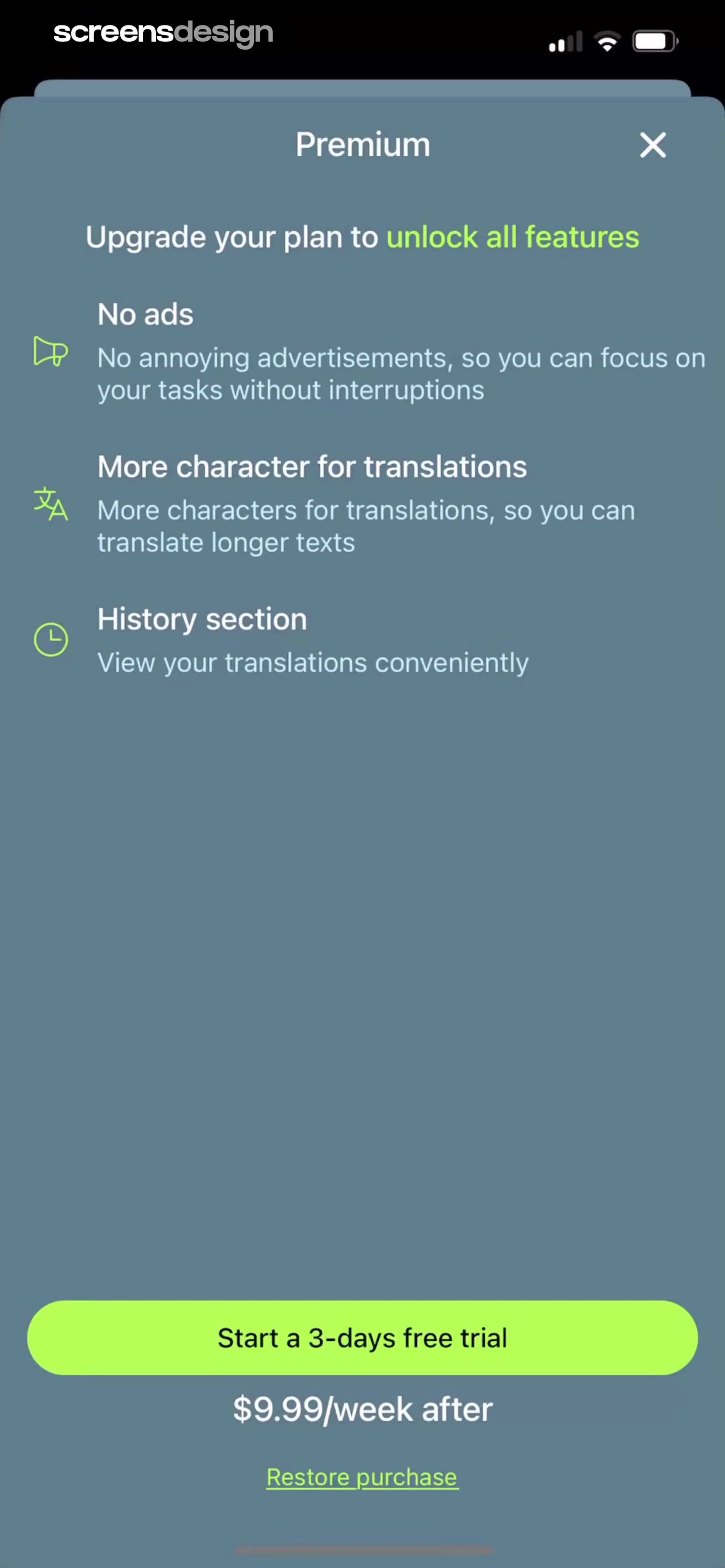
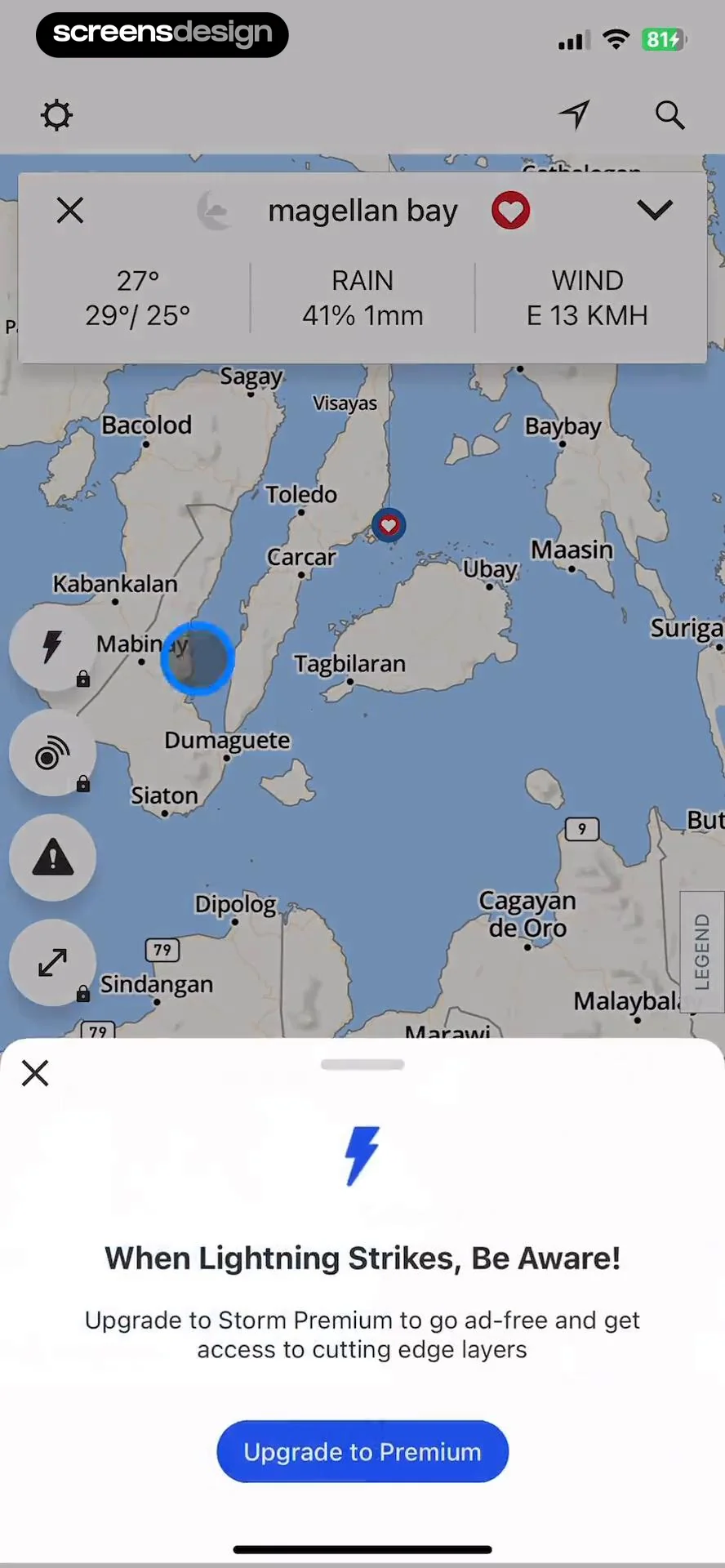
In Signal Code, the interface names "Upgrade your plan to unlock all features" and "No ads". Storm Radar: Weather Tracker pairs "magellan bay" with "29°/ 25°". Together, the two recorded screens make confirm and enforce immediately concrete: After purchase, ads should disappear without a restart. The comparison is useful as interface evidence, but it does not show which product converted, retained, or satisfied more users.
Refresh entitlement, dismiss active placements safely, and confirm the plan or permanent unlock. Restore and support should recover missing removal. Put the account fact before persuasive language, keep the primary action tied to the user's current job, and show a safe route out. When a price, date, allowance, or entitlement is involved, it should come from the same verified source that enforces the product behavior.
Test cached ads, offline sessions, account switching, purchase pending, refunds, and revocation. Write loading, empty, pending, success, failure, and stale-state copy before polishing the ideal screen. Preserve user input and navigation across external checkout or account management, then refresh the interface without requiring a restart.
Implementation
Build the interface from account and entitlement truth.
The visual state is reliable only when billing, account identity, product rules, and recovery behavior agree.
Centralize ad eligibility behind an entitlement check used by every banner, interstitial, native, pre-roll, and rewarded placement. Do not scatter plan checks through screens where a new format can accidentally ignore the purchase.
Separate voluntary rewarded ads from forced advertising. If paid users may still choose a reward, label it as optional and do not display it as a broken promise. Define whether house promotions and sponsored content count as ads.
On verified purchase, invalidate ad eligibility immediately, stop future requests, and remove placements without collapsing layout unpredictably. Reserve stable space or reflow intentionally so the product does not jump while the user works.
Support both recurring and non-consumable products accurately. Restore permanent purchases, refresh subscription status, and handle refunds or entitlement revocation while preserving account state.
- Document every account, billing, entitlement, and transition state before implementation.
- Keep prices, dates, limits, products, and available actions sourced from verified data.
- Preserve the initiating task through checkout, restore, external management, and failure.
- Use idempotent purchase and entitlement updates so retries cannot duplicate value.
- Provide accessible status, focus management, error copy, and a safe exit.
Measurement
Measure whether people recover the task, not only whether they pay.
Commercial events need product-completion and trust guardrails.
Track ad-free offer views by trigger, plan selection, verified purchase, restore, ad request suppression, and continued core-task use. Separate standalone removal from broader premium upgrades.
Guardrails include ads shown to entitled users, layout gaps, repeated offers after dismissal, rewarded-value loss, refund requests, restore failure, and support contacts. Monitor free-product health rather than treating more friction as successful monetization.
Test whether users understand what remains after purchase. The examples show framing and package choices, not proof that a remove-ads offer improves retention or satisfaction.
Review checklist
Review the complete state before shipping.
Test the screen with new, active, trialing, pending, canceled, expired, restored, offline, and wrong-account fixtures where they apply. Exercise every external handoff and return path with slow callbacks and interrupted network access.
Compare the rendered copy with the billing catalog and entitlement service. Then repeat the task with VoiceOver or TalkBack, larger text, reduced motion, localized prices and dates, narrow screens, and a user who dismisses the offer.
- The offer appears in a relevant, non-coercive context.
- Banner, interstitial, pre-roll, native, and rewarded scope is defined.
- Recurring and one-time terms are unmistakable.
- Free users retain a functional product.
- Every ad placement reads one entitlement source.
- Ads disappear immediately after verified purchase.
- Restore, offline, account switch, refund, and legacy purchase are tested.
Questions and answers
Ad-free upgrades questions
What should an ad-free upgrade screen say?
State which ads are removed, the price and purchase model, any additional benefits, account or family coverage, and how to restore or manage access.
Should remove ads be a subscription or one-time purchase?
Either can work if the terms match ongoing costs and are presented clearly. A standalone permanent unlock should not be described like an auto-renewing plan.
Can paid users still see rewarded ads?
Only as a clearly optional way to receive a benefit, and only if the ad-free promise explains that exception.
Where should the ad-free offer appear?
Provide it in settings and consider a respectful contextual prompt after a real ad interaction, with frequency caps and dismissal memory.
How do teams verify an ad-free purchase?
Confirm entitlement, route every placement through the same check, stop new ad requests, remove active placements, and test restore and revocation.
Apps referenced in this page
Open the products behind the examples.
 iScreen - Widgets & WallpaperThemes, Icons & Wallpapers
 FlightAware Flight TrackerAirplane & flight tracker
 MyRadar Accurate Weather RadarDoppler, NOAA & NWS Forecasts
 VPN - Fast VPN Super ™Best School VPN for iPhone
 Weather & Radar4-Day Radar Forecast
 Super Slime SimulatorRelaxing ASMR Creative Games
 QANDA: AI Math & Study HelperSnap & Get Help As You Study
 Plane Finder ⁃ Flight TrackerFlight Radar & Live Tracker
 Signal CodeView recorded app flows
 Storm Radar: Weather TrackerWinter Storm Radar & Alerts
2,730 apps in the top charts.Ask them anything.
Search real app flows, compare the screens around each decision, and turn stronger references into your own product.