Meditation app onboarding
10 Meditation App Onboarding Examples
Learn enough about intent and timing to recommend one useful session, then let the customer experience the product.
Meditation apps enter a sensitive moment. People may arrive with stress, poor sleep, anxiety, curiosity, spiritual goals, or a desire to build a routine. Onboarding should respect that context without diagnosing the person, demanding disclosure, or making a calm experience feel like a test.
These ten recorded examples ask for goals, explain how practice and reflection count, configure reminders, offer one-minute commitments, translate answers into a plan, and reassure people that choices can change. Together they show a useful sequence: understand intent, reduce the first commitment, deliver a relevant practice, and ask for habit support only after the value is clear.
Keep personalization proportional. A few meaningful choices can select a first session and home emphasis. Additional questions should wait until the person has enough experience to answer them. Skip and Not now should preserve a complete path into the app.
Read personalized app onboarding for the adjacent product state and its handoff into this decision.
01. Goal meaning
Explain how goals affect the experience.
A goal question earns its place when it changes content or progress.
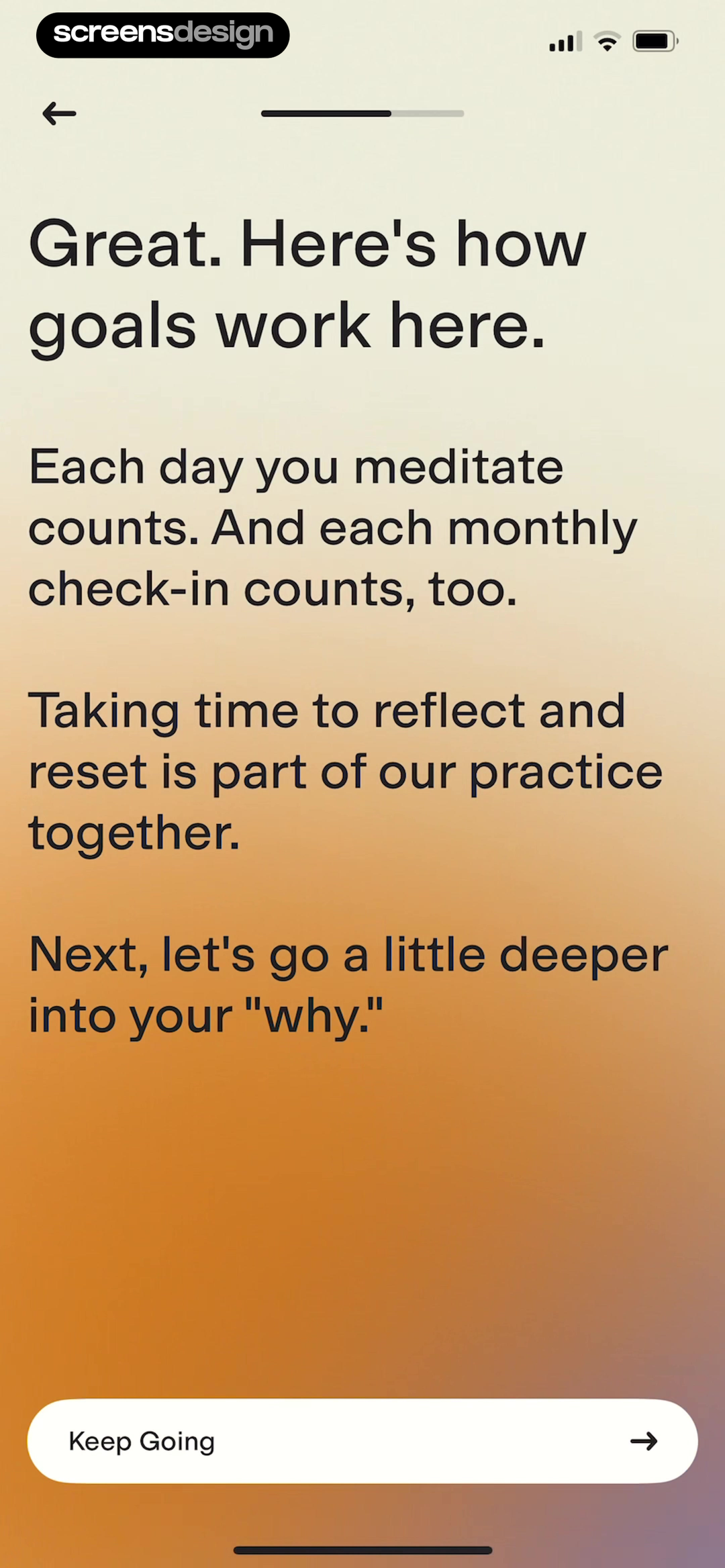
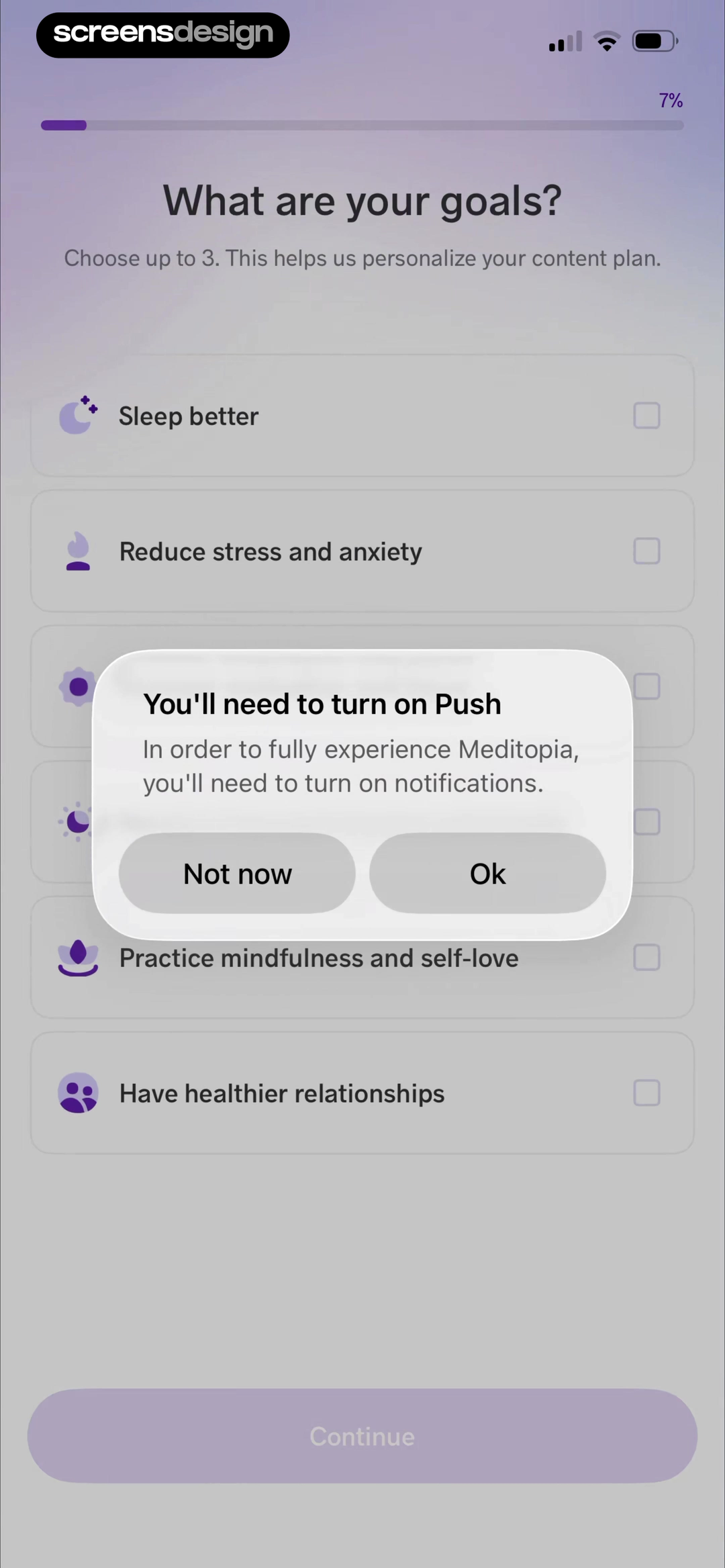
Happier Meditation shows that the app explains that meditation days and monthly check-ins both count before asking for a deeper why. Meditopia: Sleep, Meditation takes a different but compatible approach: up to three goals personalize content, while notification access is explained as a separate requirement. Together, the examples reveal which details must stay visible at the decision point rather than being deferred to support or legal copy.
Let people choose a small set of outcomes and state what will be personalized. Avoid treating goals such as anxiety relief as a diagnosis or guaranteed result.
Test the normal path, dismissal, back navigation, interruption, app relaunch, slow network, stale account data, and the state after completion. The primary label, confirmation, saved data, and next destination should describe the same outcome. Check large text, screen readers, keyboard focus, translated copy, and reduced motion so the decision remains understandable without relying on layout or color alone.
02. Reminder timing
Connect reminders to a chosen routine.
A reminder is more credible after the person understands the practice.
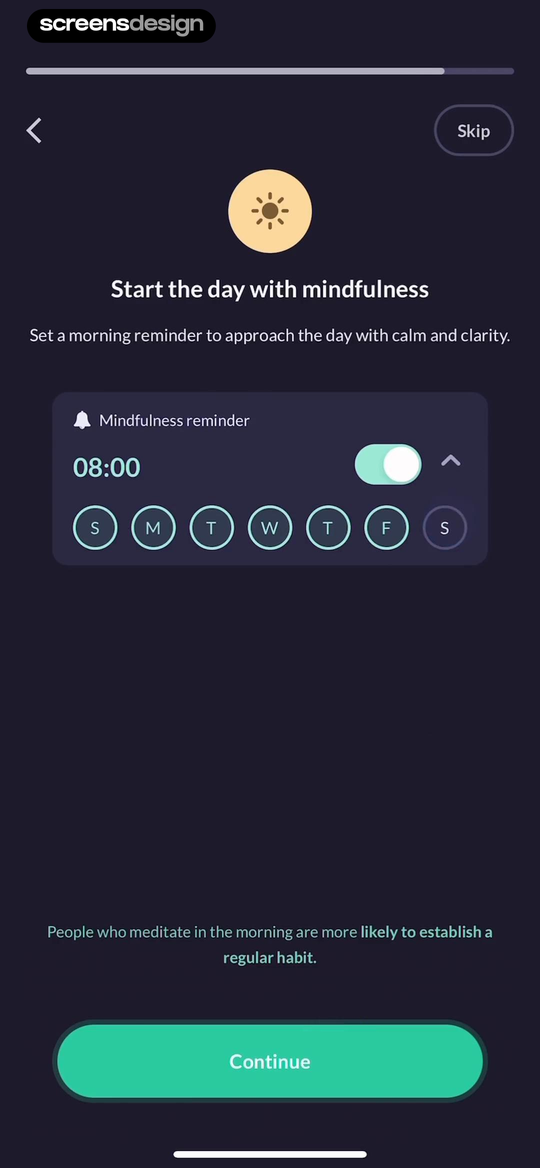
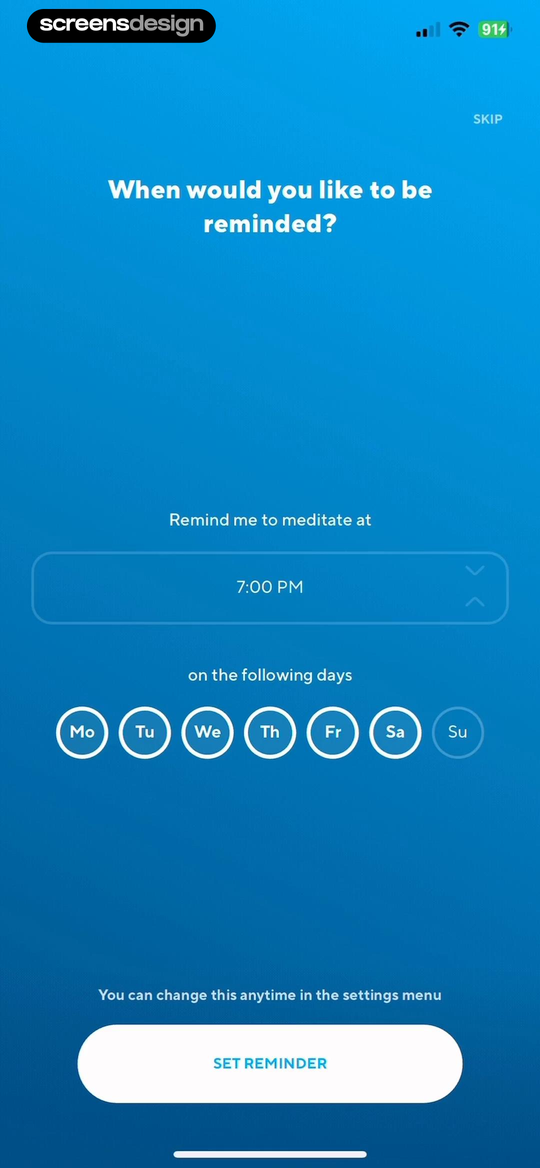
Pura Mente: Sleep & Meditation shows that a morning reminder is framed as starting with calm and clarity, with time, days, and Skip visible. The Mindfulness App takes a different but compatible approach: reminder time and weekdays are configured in one step with a clear Skip route. Together, the examples reveal which details must stay visible at the decision point rather than being deferred to support or legal copy.
Ask for time and days in one compact step, show Skip, and request operating-system permission only after the in-app preference is set.
Test the normal path, dismissal, back navigation, interruption, app relaunch, slow network, stale account data, and the state after completion. The primary label, confirmation, saved data, and next destination should describe the same outcome. Check large text, screen readers, keyboard focus, translated copy, and reduced motion so the decision remains understandable without relying on layout or color alone.
03. Manageable intent
Turn broad outcomes into a clear starting point.
One primary goal can be more useful than selecting every aspiration.
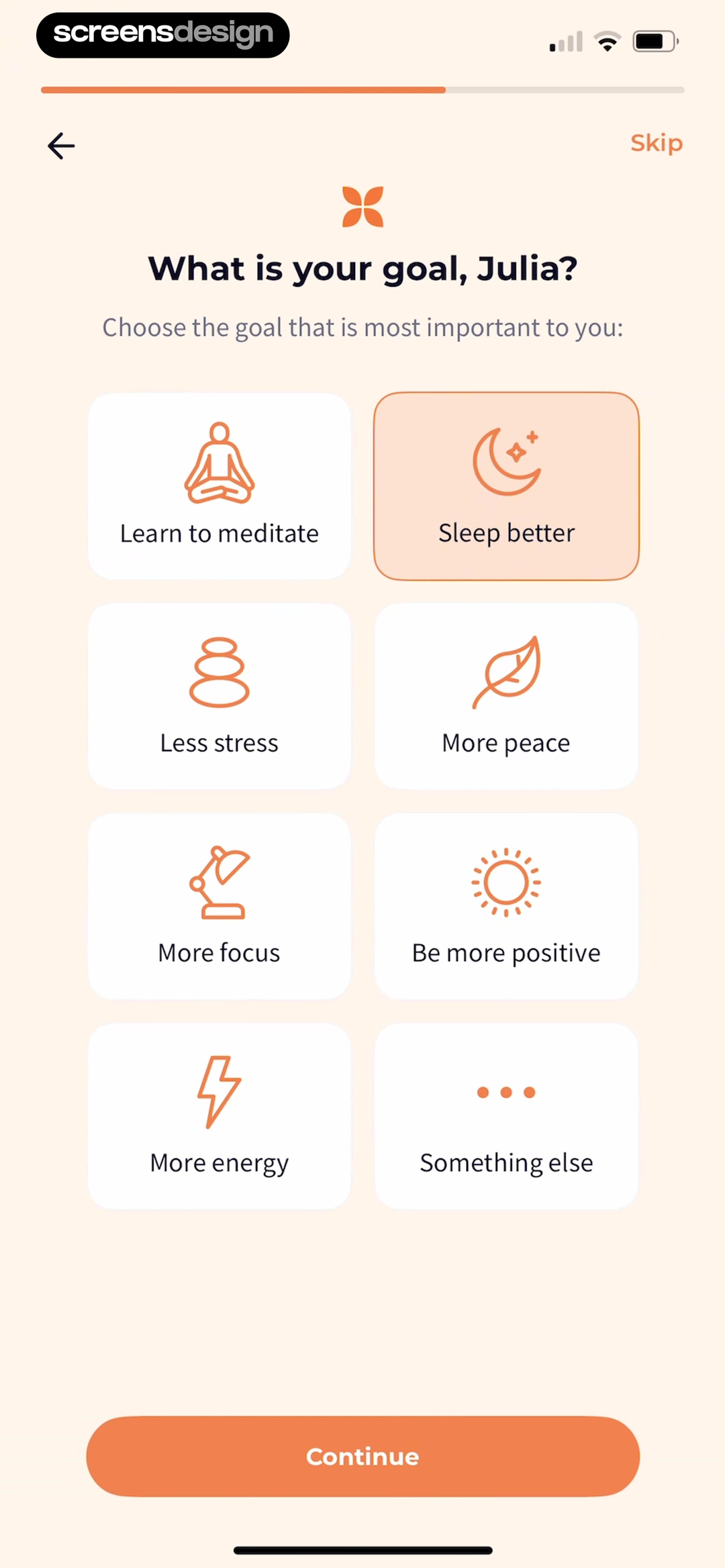
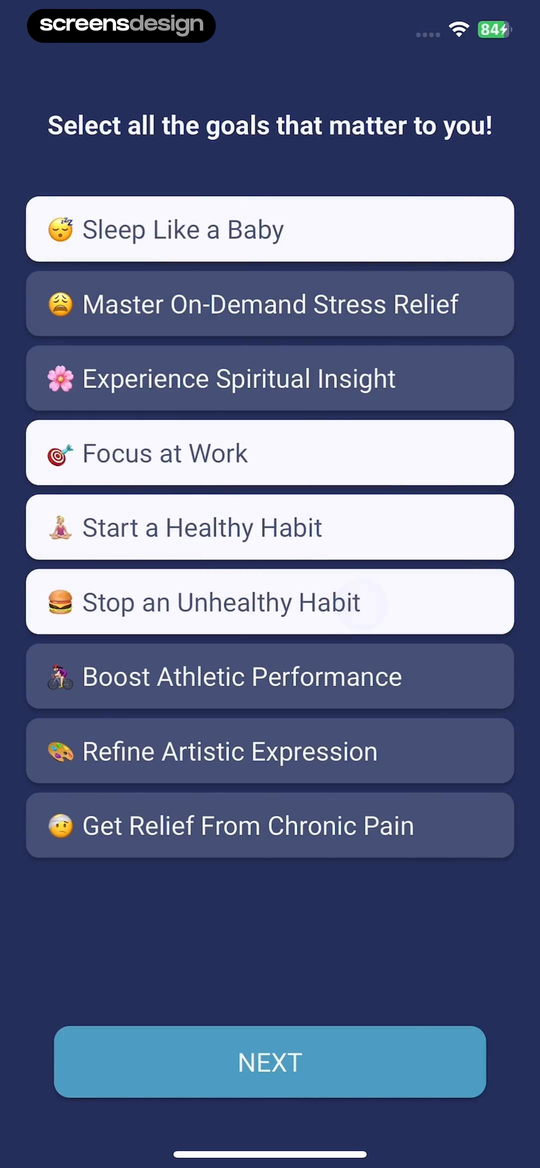
Meditation Moments - Guided shows that one primary goal is chosen from meditation, sleep, stress, peace, and focus. Brightmind Meditation takes a different but compatible approach: the multi-select list covers sleep, stress relief, spiritual insight, focus, habits, and performance. Together, the examples reveal which details must stay visible at the decision point rather than being deferred to support or legal copy.
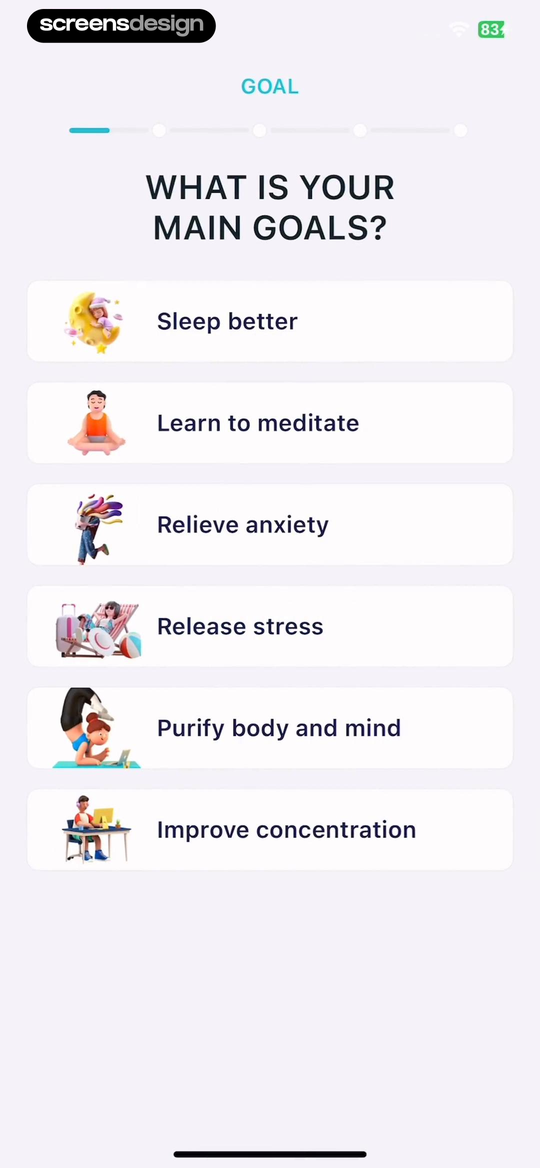
Use familiar language such as sleep better, reduce stress, focus, or learn to meditate. Explain whether multiple choices affect the first session, plan, or library.
Test the normal path, dismissal, back navigation, interruption, app relaunch, slow network, stale account data, and the state after completion. The primary label, confirmation, saved data, and next destination should describe the same outcome. Check large text, screen readers, keyboard focus, translated copy, and reduced motion so the decision remains understandable without relying on layout or color alone.
04. First commitment
Make the first habit small and specific.
A one-minute or three-minute plan lowers the cost of beginning.
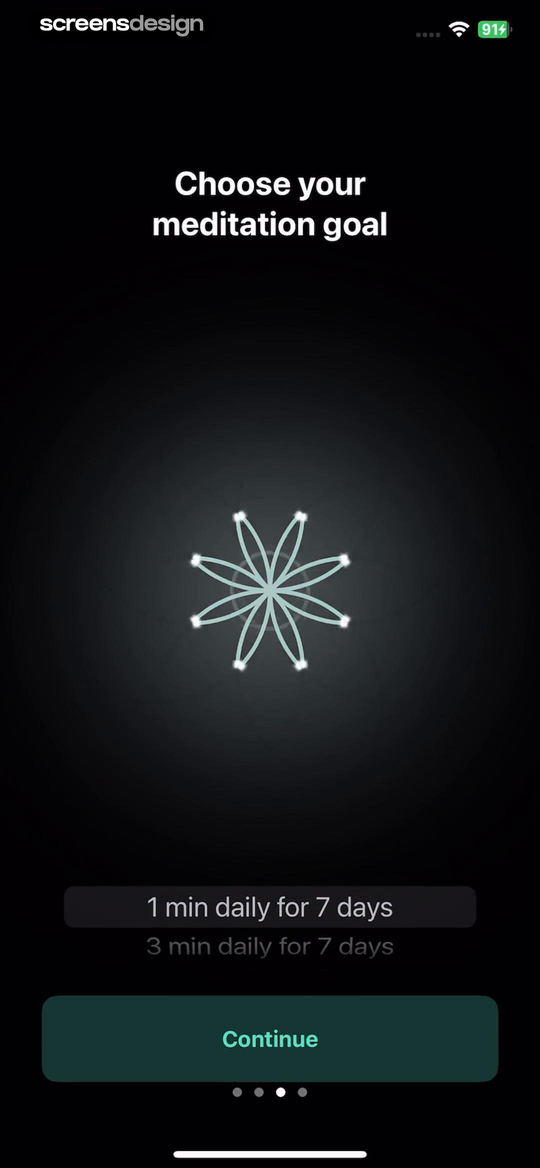
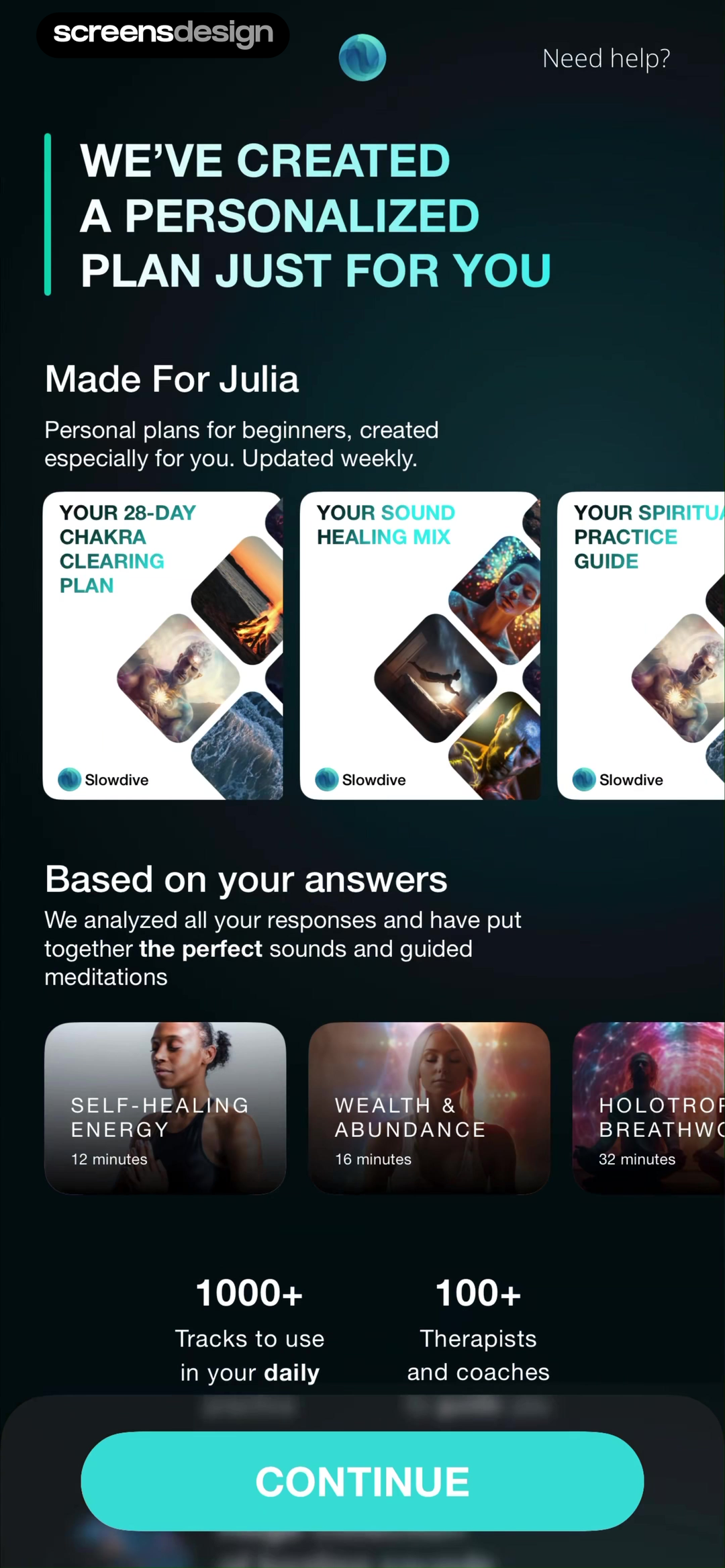
Meditate - Mindfulness app shows that one-minute and three-minute daily commitments make the first seven-day goal concrete. Slowdive | Meditation & Mantra takes a different but compatible approach: answers are translated into a named 28-day plan, sound-healing mix, and spiritual-practice guide. Together, the examples reveal which details must stay visible at the decision point rather than being deferred to support or legal copy.
Let the customer choose duration and cadence, then match the first practice. If the app creates a longer plan, show what answers shaped it and allow edits.
Test the normal path, dismissal, back navigation, interruption, app relaunch, slow network, stale account data, and the state after completion. The primary label, confirmation, saved data, and next destination should describe the same outcome. Check large text, screen readers, keyboard focus, translated copy, and reduced motion so the decision remains understandable without relying on layout or color alone.
05. Supportive language
Keep choices flexible and free of judgment.
Meditation goals can change with life and experience.
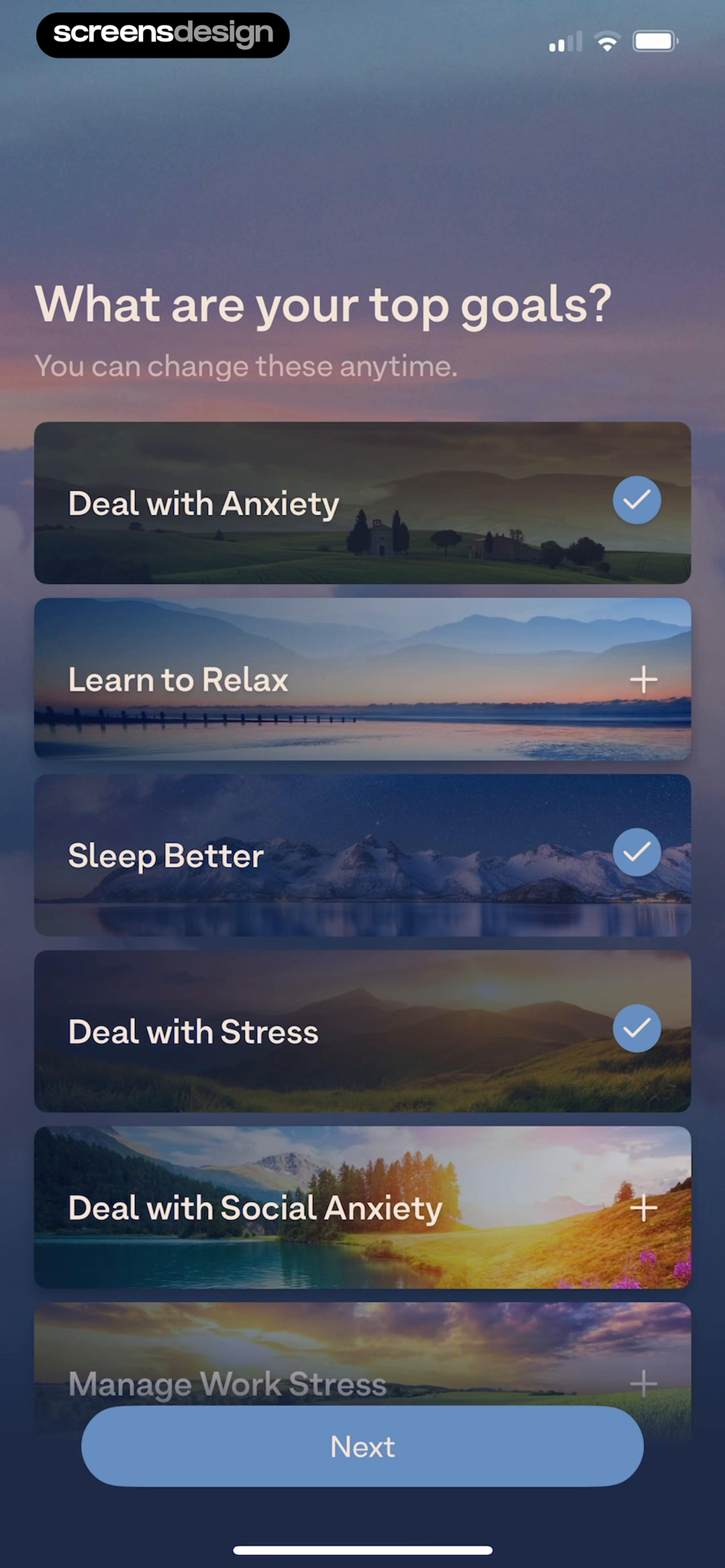
Brainpal: Heal & Meditation shows that sleep, anxiety, stress, concentration, meditation, and mind-body goals use plain outcome language. Breethe: Sleep & Meditation takes a different but compatible approach: top goals can be changed later, reducing pressure around anxiety, relaxation, sleep, and work-stress choices. Together, the examples reveal which details must stay visible at the decision point rather than being deferred to support or legal copy.
Say that selections can be changed, avoid promises of cure, and make none of these or explore first available. Use safety and support guidance when content touches acute distress.
Test the normal path, dismissal, back navigation, interruption, app relaunch, slow network, stale account data, and the state after completion. The primary label, confirmation, saved data, and next destination should describe the same outcome. Check large text, screen readers, keyboard focus, translated copy, and reduced motion so the decision remains understandable without relying on layout or color alone.
Implementation
Build the state model before polishing the screen.
Interface quality depends on entitlement, account, billing, content, and analytics state agreeing.
Represent goals as customer-selected preferences with clear content effects, not medical conclusions. Map each goal to a small first-session set, home ranking, and optional program. Keep the raw choice editable and avoid silently inferring sensitive mental-health attributes from casual behavior.
Sequence onboarding so the person can reach a first practice quickly. Defer account creation, notification permission, subscriptions, and detailed profiling until each is needed. Preserve audio, language, accessibility, downloaded-content, and reminder preferences across devices where the account model supports it.
Test Skip, no goal, one goal, several goals, very short session, reminder denied, reminder edited, interrupted audio, background playback, offline use, content unavailable, changed goal, reduced-motion settings, screen reader, and a returning meditator who wants to browse directly.
- Goal questions state how answers change the experience.
- Sensitive outcomes are not treated as diagnoses or guarantees.
- The first practice is reachable without completing every question.
- Reminder time is chosen before system permission is requested.
- Small, realistic commitments are available.
- Goals, schedule, and personalization can be edited later.
Measurement
Measure the completed outcome, not only the first tap.
A visible control is useful only when the customer reaches the expected state and can continue.
Track first practice started, first practice completed, goal edited, reminder enabled, and return for second practice. Define the successful product state before launch and verify it from server or platform truth where possible. A button tap without the promised entitlement, schedule, reward, survey result, or recovered access should be counted as an error, not conversion.
Segment by entry point, customer state, current plan or program, platform, app version, locale, accessibility settings, prior failures, and whether the person returned after leaving the flow. Compare immediate completion with what happens during the next relevant session so a short-term click does not hide confusion or regret.
Review guardrails alongside the primary metric: repeated attempts, backtracking, support contact, refund, cancellation, incorrect access, disabled reminders, abandoned tasks, and manual corrections. Read open feedback and replay representative failures with sensitive information protected. The goal is a trustworthy customer outcome, not a higher number produced by obscuring alternatives.
Review checklist
Test the content, the control, and the resulting account state.
Create accounts for the new, active, returning, expired, interrupted, unsupported, and already-completed states. Verify copy, available actions, confirmation, account data, navigation, and the destination for each one.
Run the flow with slow and failed network calls, app relaunch, another device, large text, screen reader, localization, denied permissions where relevant, and a customer who changes their mind. Every path should preserve data and provide a clear way forward.
- Goal questions state how answers change the experience.
- Sensitive outcomes are not treated as diagnoses or guarantees.
- The first practice is reachable without completing every question.
- Reminder time is chosen before system permission is requested.
- Small, realistic commitments are available.
- Goals, schedule, and personalization can be edited later.
Questions and answers
Meditation app onboarding questions
What should meditation app onboarding ask?
Ask only what changes the first experience, such as a primary goal, experience level, preferred duration, or optional reminder schedule.
How long should meditation onboarding be?
It should reach a relevant first practice quickly. Defer profile details, permissions, and additional personalization until their purpose is clear.
When should a meditation app request notifications?
Let the person choose a reminder time and understand its value first, then show the operating-system permission prompt.
Should onboarding ask about anxiety or sleep?
It can offer customer-selected goals in respectful language, but it should not diagnose, promise treatment, or require sensitive disclosure for basic use.
What is a good first meditation commitment?
Offer a duration small enough to complete now, such as one to five minutes, and let the person adjust cadence after experiencing the practice.
Apps referenced in this page
Open the products behind the examples.
 Happier MeditationPractice Healthy Mindfulness
 Meditopia: Sleep, MeditationMindfulness, Breathe, Sounds
 Pura Mente: Sleep & MeditationMindfulness, Calm Anxiety
 The Mindfulness AppMeditation, sleep & relaxation
 Meditation Moments - GuidedSleep, breathe, relax & focus
 Brightmind MeditationSleep, Stress Relief & Focus
 Meditate - Mindfulness appMeditation Timer & Tracker
 Slowdive | Meditation & MantraSleep Better | Reduce Anxiety
 Brainpal: Heal & MeditationRelax. Sleep. Energy reset.
 Breethe: Sleep & MeditationBreathe to Calm Anxiety Stress
2,715 apps in the top charts.Ask them anything.
Search real app flows, compare the screens around each decision, and turn stronger references into your own product.